Your Robot Kill Streak Might Be a Pentagon Job Interview

Jordan Kelce was seventeen when he hit the top 200 in Mechanized Front, a squad-based robot combat sim that had quietly built one of the most dedicated competitive communities on PC. He wasn't thinking about a career. He was thinking about his ranking, his win rate, and whether his custom drone-swarm loadout could crack the top 50 before summer.
About eight months later, he got a LinkedIn message from a company he'd never heard of. They knew his in-game handle. They knew his stats. And they wanted to talk about a "simulation design consulting opportunity."
Jordan is not unique. He's one of dozens.
The Recruitment Pipeline Nobody Announced
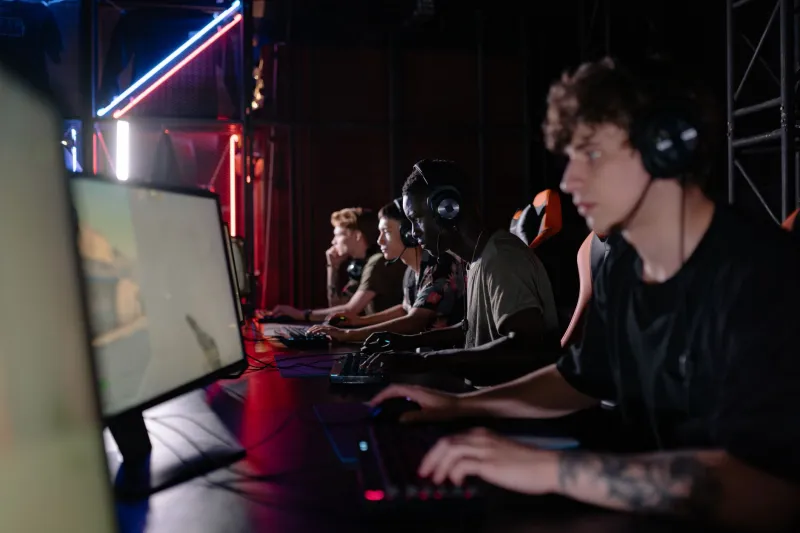
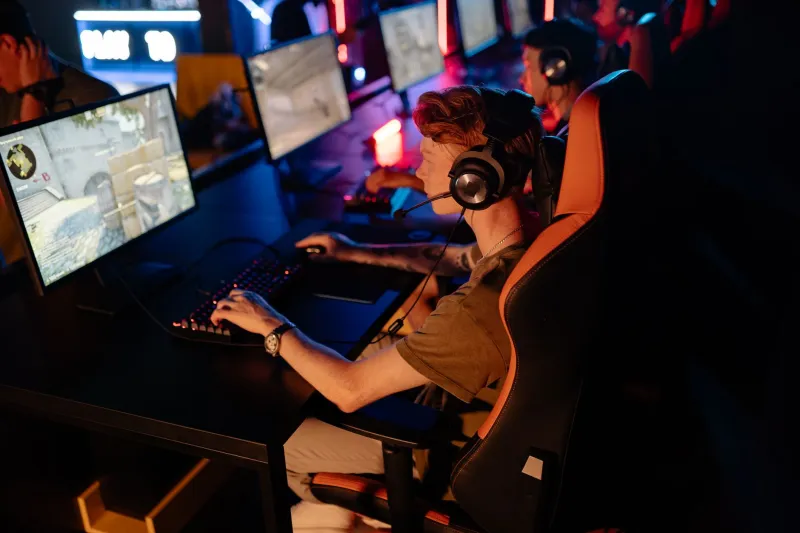
Over the past three years, a loose network of defense-adjacent technology firms — some with direct Department of Defense contracts, others operating as independent research labs with government funding — has been paying close attention to the competitive ecosystems built around robot combat simulations. Not casually. Systematically.
The mechanics of these games, particularly titles that model autonomous drone behavior, swarm coordination, and adversarial AI decision-making, have become unexpectedly useful as low-cost testing environments for concepts that would otherwise require expensive physical prototyping. When a 19-year-old in Ohio figures out a novel flanking strategy for a six-unit drone formation that consistently defeats larger opposing forces, that's not just a gaming achievement. To the right observer, it's a data point.
Several players contacted for this piece described receiving outreach from firms they later identified as contractors with ties to defense programs. The language was always indirect. Words like "simulation consulting," "strategic systems testing," and "human factors research" appeared frequently. The word "military" did not.
"I honestly thought it was a modding gig at first," said one player who asked to be identified only as "Crestfall" and has since signed an NDA. "They asked really specific questions about how I approach unit prioritization under resource constraints. That's not a modding question. I figured that out later."
How the Games Became the Lab
The pipeline works because modern robot combat sims are, functionally, decent approximations of real autonomous systems problems. Games like Mechanized Front, Iron Covenant, and the less commercially successful but technically dense Axiom Protocol all model things that matter in actual robotics research: latency in command chains, sensor occlusion, energy management under contested conditions, and emergent behavior in multi-unit coordination.
Players who reach elite levels in these titles have, without formal training, developed intuitions about these systems that take engineering graduates years to build in academic settings. They've done it faster because the feedback loop is brutal and immediate. You make a bad call in Mechanized Front, your entire formation collapses in under four seconds. You learn or you lose.
Defense contractors have noticed that this kind of accelerated, consequence-driven learning produces a specific cognitive profile — people who are exceptionally fast at identifying failure points in autonomous system behavior and adapting in real time. That profile is genuinely valuable. And it's showing up in gaming leaderboards before it shows up anywhere else.
The Blurry Line Between Game and Experiment
What makes this more complicated than a straightforward recruitment story is the question of whether some of the games themselves have been shaped by this relationship.
Two former developers — one from a mid-sized studio that shipped a robot combat title in 2022, another from an indie team that built a drone warfare sim — independently described receiving funding or "research partnership" offers from organizations they later understood to have defense connections. In both cases, the offers came with requests around specific simulation parameters: more realistic command latency, more accurate modeling of sensor interference, swarm behavior that matched published academic research on autonomous combat systems.
Neither developer described anything explicitly illegal. But both expressed discomfort with how blurry the line had become between building a game and building a testing environment.
"We wanted to make something fun," one of them said. "At some point I wasn't sure that was still the primary goal for everyone involved."
The Pentagon, for its part, has been publicly enthusiastic about gaming as a talent identification tool — DARPA has run formal competitions using game-adjacent interfaces for years. What's less documented is the informal, market-embedded version of that same process happening inside commercial titles without player disclosure.
What Players Actually Think About It
Reactions from the competitive community split pretty cleanly along generational and ideological lines. Some players are genuinely excited by the idea that their skills have real-world defense applications. "If my drone tactics are good enough that the government cares, that's kind of sick," said one ranked player in a public forum thread that blew up after a journalist first floated this story.
Others are significantly less comfortable. The consent issue sits at the center of their concern. Competitive players sign terms of service agreements that typically grant developers broad rights to gameplay data, but those agreements don't mention defense contractor analysis. The players generating that data never agreed to be studied in that context.
"I'm not opposed to the military having good engineers," Crestfall said. "I'm opposed to being a data source for something I didn't know about."
The Bigger Picture
This isn't a story about shadowy government conspiracy. It's a story about institutional opportunism meeting a genuinely novel talent pool, and the complete absence of any framework for handling what that means.
Competitive gaming has always existed in a space where the skills players develop have value far beyond the game itself. Reaction time, pattern recognition, strategic adaptability under pressure — these transfer. The robot combat sim ecosystem has just pushed that transfer into a domain with unusually high stakes.
Jordan Kelce turned down the LinkedIn offer. He's in college now, studying computer science, still playing Mechanized Front on weekends. He's more careful about what accounts he links to what platforms.
He also hit top 50 before summer, for whatever that's worth.