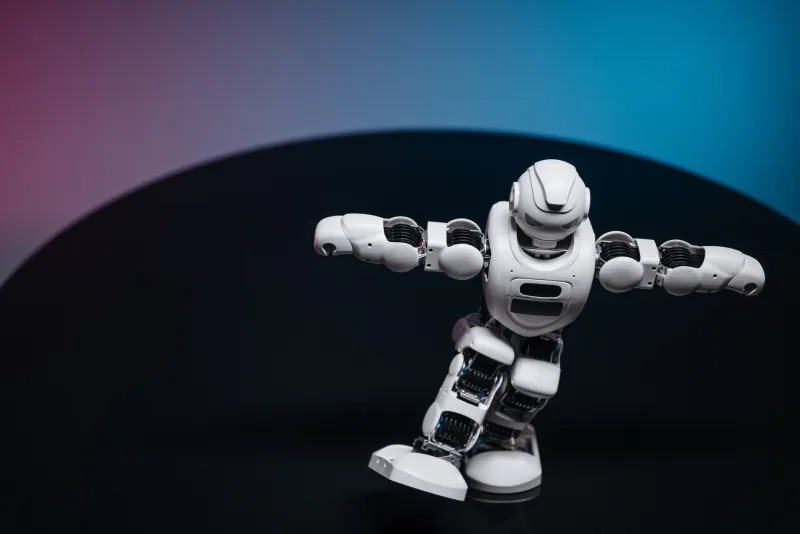
He Bet $50K He Could Beat It. The Robot Had Other Plans.
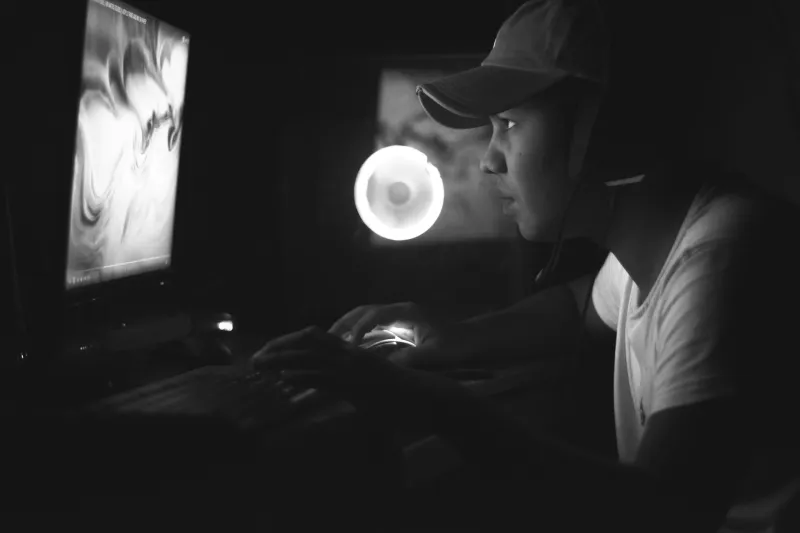
Everybody in the community knew Marcus "Faultline" Dreyer was good. Not just good — the kind of good that makes other speedrunners quietly close their streams and reconsider their life choices. Over four years, he'd dismantled dozens of robot bosses across competitive circuits from Austin to Atlanta, building a reputation on one core skill: reading machine behavior and exploiting it with almost surgical precision.
So when Iron Covenant dropped its 2.1 patch featuring HERALD-9 — a fully motion-captured humanoid combat AI marketed as "the most realistic enemy ever coded" — Dreyer didn't see a threat. He saw a payday.
Fifty thousand dollars later, he'd see something else entirely.
The Setup
The bet started the way most catastrophically bad financial decisions do: in a Discord server at 1 a.m. A rival crew from the Pacific Northwest had been running their mouths about HERALD-9's supposed unpredictability, claiming no one could guarantee a clean sub-8-minute kill on Legendary difficulty. Dreyer, fresh off a tournament win and apparently feeling invincible, took the other side publicly and in writing.
The terms were straightforward. Three attempts. Best run counts. If Dreyer posted a sub-8 on any of them, he pocketed $50K from a pooled wager. If he failed all three, the money flowed the other direction.
Neither side expected what actually happened.
When the Robot Stopped Being a Robot
HERALD-9 was built differently from the ground up. The Iron Covenant development team, working with a motion-capture studio in Los Angeles, had recorded over 400 hours of real combat movement from trained martial artists and military consultants. They then fed that data into a proprietary behavioral engine designed to blend those movements in real time based on player positioning, attack history, and — this is the part that matters — something the patch notes vaguely described as "adaptive response weighting."
In plain English: the boss didn't just react to what you were doing. It reacted to what you'd done before, adjusting its timing and spacing based on patterns it detected across multiple engagements.
For a casual player, this was a cool immersion feature. For a speedrunner whose entire strategy depended on exploiting predictable timing windows, it was a nightmare dressed in photorealistic skin.
Dreyer's first attempt collapsed around the four-minute mark. HERALD-9 broke from its standard aggression loop at a moment Dreyer had mapped as a guaranteed opening — the same opening that had worked in dozens of practice runs. Viewers watching the stream saw Dreyer pause for a fraction of a second, visibly confused. That fraction of a second cost him the run.
The second attempt was worse. The boss mirrored a defensive posture Dreyer had never seen before, essentially refusing to engage in a way that shattered his damage-per-second math entirely. He burned time forcing engagements that weren't there, finished at 9:41, and sat in silence for almost thirty seconds before speaking.
The third run, he didn't even come close.
The Uncanny Valley Isn't Just Visual Anymore
Here's the thing most people outside competitive circles don't fully appreciate: speedrunners don't just memorize routes. They build internal models of how enemies think — or more accurately, how they simulate thinking. The whole craft depends on the fact that game AI, no matter how sophisticated, operates within a ruleset. Find the edges of that ruleset, and you find the exploit.
But HERALD-9's behavioral engine created something genuinely disorienting: an AI that felt like it was making judgment calls. Not because it actually was — it's still code, still deterministic at some level — but because its motion-capture foundation made micro-adjustments look intentional. Human. Considered.
Dreyer told his stream afterward, "I kept waiting for it to do the thing. And it kept almost doing the thing, and then not doing the thing, and I couldn't tell if I was misreading it or if it was misreading me."
That's the uncanny valley applied to behavior instead of appearance. And it's arguably more destabilizing.
What This Breaks for Competitive Play
The fallout from Dreyer's loss opened up a legitimate debate that's still running hot in competitive gaming forums. If a boss AI can adapt to a specific player's documented tendencies — and HERALD-9's engine technically does this, pulling from session data — is it even fair to run wager matches against it? You're not competing against a static system anymore. You're competing against something that has, in a meaningful sense, studied you.
Tournament organizers are already scrambling. Two major Iron Covenant circuit events have quietly revised their ruleset to cap HERALD-9 matches at "fresh session" conditions, meaning the AI's adaptive memory gets wiped before each competitive run. It's a workaround, not a solution.
The deeper problem is that studios are going to keep pushing this direction because players keep rewarding them for it. Realistic enemy behavior generates clips, clips generate views, views generate sales. The commercial incentive to make AI opponents feel more human is enormous. The competitive infrastructure to handle what that actually means? Basically nonexistent.
Dreyer's Next Move
For what it's worth, Dreyer isn't done. He's spent the weeks since the loss running what he calls "behavioral deconstruction sessions" — extended play periods specifically designed to map HERALD-9's adaptive limits. He believes the engine has a ceiling, a point at which its pattern library runs out of novel responses and it falls back on defaults.
Maybe he's right. Maybe that ceiling exists somewhere around the 600-hour mark and he'll find it before anyone else does.
Or maybe he's doing exactly what HERALD-9's behavioral engine was built to provoke: feeding it more data, giving it more patterns to learn, making it better at beating him the next time he steps up.
Fifty grand is a steep tuition. But in this game, the machine keeps taking notes.