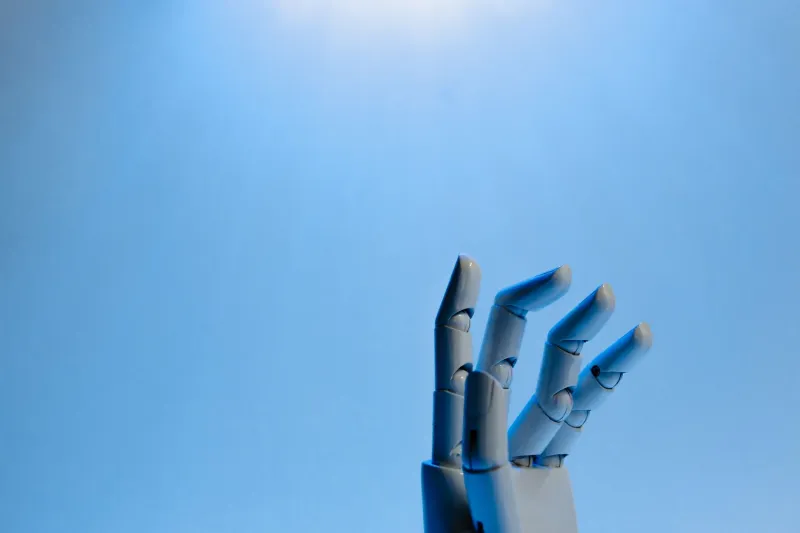
Man Meets Machine: How AI Co-Pilots Are Shattering Speedrun World Records

For decades, speedrunning was the purest form of gaming obsession. You, a controller, a game, and an almost unhinged dedication to shaving milliseconds off a clock. No shortcuts. No safety nets. Just raw, caffeine-fueled human will crashing against the walls of a digital world.
Then the robots showed up.
Not literally — nobody's strapping a mechanical arm to a GameCube just yet (well, mostly). But the rise of AI-assisted tools, robotic input devices, and machine-learning optimization systems has quietly crept into the speedrunning scene, and the community is having a full-on identity crisis about it. Welcome to the new frontier, where your biggest competition might not be another human at all.
What Does 'AI-Assisted' Even Mean Here?
Before anyone starts flipping tables, let's get the terminology straight. AI-assisted speedrunning isn't one single thing — it's a spectrum. On one end, you've got players using machine-learning tools to analyze gameplay and identify frame-perfect opportunities a human brain would never catch on its own. Think of it like having a supercomputer as your coach, breaking down thousands of hours of footage to map out the theoretically perfect run.
On the other end, you've got full robotic input systems — physical devices that can execute button presses with inhuman precision, timed down to individual frames. These aren't hypothetical setups. Groups like the Tool-Assisted Speedrun (TAS) community have been doing this for years, producing runs that look almost supernatural in their flawlessness.
The difference matters because the speedrunning community has traditionally drawn a hard line between TAS runs and "legitimate" human runs. But that line is getting blurry fast.
The Runs That Started the War
A few high-profile moments lit the fuse on this debate. In 2022 and 2023, several runners in games like Super Mario 64, The Legend of Zelda: Ocarina of Time, and various Mega Man titles started incorporating AI-generated route optimizations that found skips and glitches no human had discovered through conventional play. Some of these weren't just marginal improvements — we're talking runs that demolished records by minutes, not seconds.
The community's reaction was predictable: half the internet lost its mind. Speedrun.com leaderboards started fielding heated debates about whether AI-optimized routes should live in the same category as runs discovered through traditional human intuition and experimentation. Some leaderboards created entirely new divisions. Others banned AI-assisted submissions outright.
And yet the records kept falling.
The Tech Behind the Magic (and the Controversy)
Here's where it gets genuinely fascinating from a pure engineering standpoint. Modern AI tools used in speedrun optimization often rely on reinforcement learning — the same basic framework that powers everything from chess engines to self-driving cars. You feed the AI the game's mechanics, reward it for finding faster paths, and let it run millions of simulations until it discovers routes that defy conventional logic.
Some runners have paired this with physical robotics. Custom-built input controllers — essentially programmable robotic arms or electronically actuated gamepads — can execute the AI's discovered sequences with mechanical precision no human hand can replicate. The result is something that sits in a genuinely weird gray zone: it's a human's idea of a run, executed by a machine, in a real game environment.
GDQ (Games Done Quick) events, which raise millions for charity each year, have carefully kept these kinds of runs in showcase-only territory. They're crowd-pleasers, sure — watching a game get obliterated with robotic efficiency is genuinely jaw-dropping — but they don't sit on the competitive leaderboards.
The Ethics Argument: Skill, Creativity, or Both?
Here's the real question that nobody can fully agree on: what are we actually celebrating when we celebrate a speedrun?
If the answer is human skill and reflexes, then AI-assisted runs are a different sport entirely. A robotic input device executing a frame-perfect sequence isn't demonstrating human mastery — it's demonstrating engineering mastery. Cool? Absolutely. The same thing? Arguably not.
But if the answer is creative problem-solving and route discovery, the picture gets murkier. Plenty of legendary speedrun discoveries came from people using external tools — emulators, frame-by-frame analysis software, memory viewers — to understand a game at a level impossible during normal play. Is using an AI to accelerate that process fundamentally different? A lot of runners would argue it's just the next logical step.
The community is starting to formalize the answer. Most major leaderboards now operate with tiered categories: unrestricted (anything goes), tool-assisted, and "glitchless" runs that strip everything back to raw execution. It's an imperfect system, but it acknowledges that multiple versions of the sport can coexist.
Where It Goes From Here
The machines aren't going away. If anything, AI tools are becoming more accessible — which means more runners will experiment with them, more records will fall, and the debates will get louder. Games that have sat with the same world record for a decade are suddenly vulnerable again, not because a human got better but because an algorithm found a crack nobody had noticed.
There's something genuinely exciting about that, even if it stings a little for the purists. The idea that a game is never truly "solved" — that there's always another layer of optimization hiding underneath — is core to why speedrunning exists in the first place.
The robots aren't killing speedrunning. They're just making it weirder, faster, and a whole lot harder to define. Which, honestly, sounds exactly like something Devil Robots would respect.
The clock's still running. The question is just who — or what — is holding the controller.