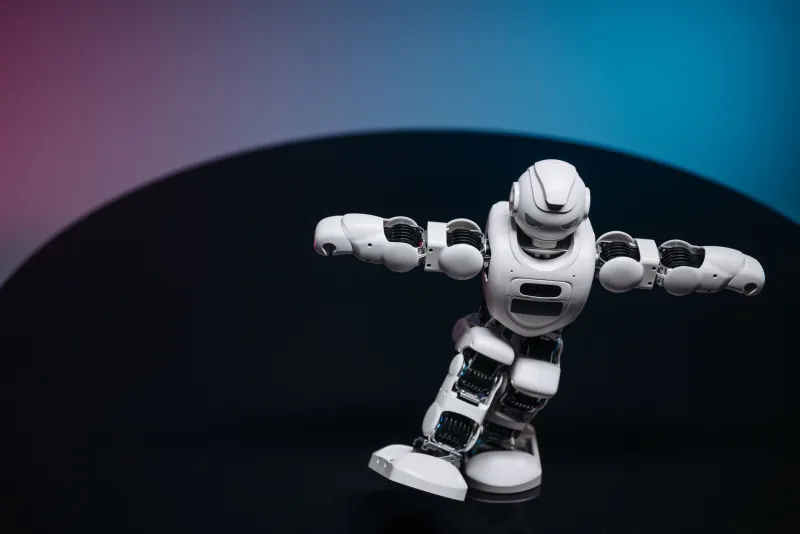
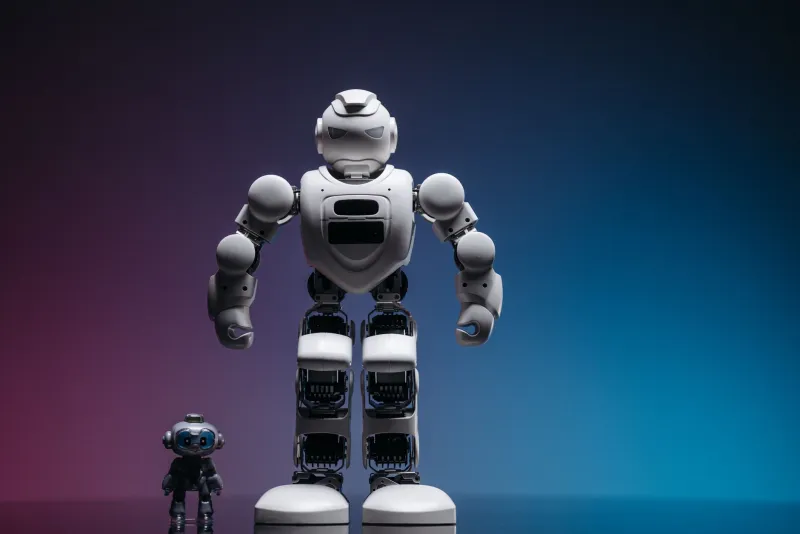
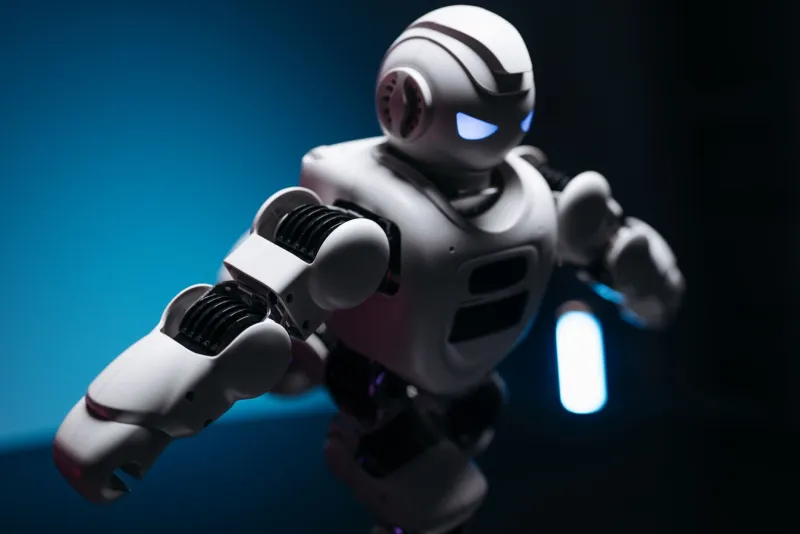
No Eyes, No Problem: The Blindfolded Gamer Who's Mastering Robot Games by Sound Alone
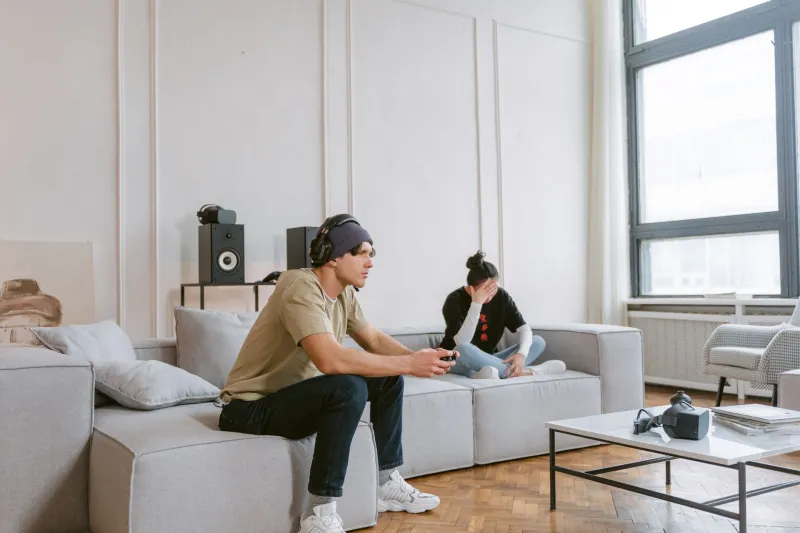
There's a moment in Iron Veil 2 — a hyper-realistic mech combat title that's basically a sensory assault course — where a massive bipedal unit rounds a corner and the whole screen goes white with motion blur. It's designed to overwhelm. It's designed to make you flinch. For most players, that moment is a gut-check. For Marcus "Volta" Reyes, it doesn't matter. He can't see it. He doesn't need to.
Volta has been speedrunning robot-focused games blindfolded for close to three years now, and he's not doing it for the clout — though he's definitely getting some. He's doing it because he genuinely believes that the audio and haptic architecture baked into modern robot games is sophisticated enough to replace visual feedback entirely. And increasingly, the data is proving him right.
The Sound of Steel
Most players treat game audio as background noise. Volta treats it like a second monitor. Modern robot titles — particularly the hyper-realistic ones obsessed with biomechanical motion — invest heavily in layered sound design. Servo whines, hydraulic hisses, the specific crunch of a metal limb making contact with a concrete floor. These aren't decorative. They're informational.
"Every enemy unit in Iron Veil 2 has a distinct audio signature," Volta explained in a recent stream. "The heavy walker stutters on its left leg — that's an actual audio tell. The scout unit has a pitch shift when it's about to charge. Once you start cataloging that stuff, you don't need the visual. The sound is the visual."
This isn't just a parlor trick. Audio designers at several major studios have confirmed — some on the record, some not — that robot enemy behavior is often more thoroughly telegraphed through sound than through animation. Visual effects get compressed, frame rates dip, motion blur kicks in. Audio tends to be more stable, more precise, and less susceptible to hardware variance. For a blindfolded runner, that's a massive structural advantage hiding in plain sight.
Haptics as a Sixth Sense
Beyond audio, Volta leans hard on haptic feedback — and not just the basic rumble that's been in controllers since the late '90s. Modern controllers with adaptive triggers and zone-specific vibration have given players a tactile language that most people never bother to learn.
In robot combat games specifically, haptic feedback often encodes information about enemy proximity, impact direction, and even AI state changes. Volta has spent months mapping these patterns, building what he calls a "haptic dictionary" for each game he runs. When the left grip buzzes at a specific frequency, he knows a flanking unit is closing in from the west. When both triggers tighten simultaneously, a charge attack is incoming.
"It's like learning Braille for a game," he said. "Tedious at first. Then it becomes automatic. Then it becomes faster than looking."
That last part is the kicker. Several of Volta's segment times in Iron Veil 2 are actually competitive with sighted runners — not just "impressive for a blindfolded run," but genuinely fast. When you're not processing a screen full of visual noise, reaction time to specific audio and haptic cues can actually improve.
What This Means for Accessibility
Volta isn't the only one operating in this space. The accessibility speedrunning community — a loose network of runners with visual impairments, motor disabilities, and other conditions that require non-standard play methods — has been quietly building a body of knowledge around non-visual game completion for years. What's changed is the hardware and the games themselves.
Robot-focused titles, weirdly, have become a sweet spot for this community. The mechanical nature of robot enemies means their behavior is highly consistent and heavily telegraphed. The industrial sound design is rich and informative. And the genre's obsession with tactile feedback — because nothing sells a mech game like feeling the ground shake — means haptic implementation tends to be unusually thorough.
Accessibility advocate and game designer Priya Nair has been documenting this trend. "There's this accidental accessibility pipeline happening in robot games," she told us. "Developers are building these incredibly detailed sensory systems to make the games feel more immersive for sighted players, and in doing so, they're accidentally creating pathways for non-visual play. Volta is just the most visible example of someone exploiting that."
The word "exploiting" is interesting here. In speedrunning culture, exploiting unintended mechanics is basically a religion. But Volta's approach doesn't feel like exploitation — it feels like revelation. He's not breaking the game. He's reading it differently.
The Speedrun Community's Reaction
Not everyone is thrilled. Some corners of the speedrunning community have debated whether blindfolded runs should be categorized separately, whether they're "real" speedruns, or whether they dilute leaderboard integrity. It's the same tired gatekeeping conversation that surfaces every time someone completes a game in an unconventional way.
Volta's response is characteristically blunt: "I'm playing the game. I'm playing it fast. If the game's audio design is good enough to support it, that's a design achievement, not a loophole."
He has a point. And increasingly, studios are paying attention. At least two developers have reached out to Volta for feedback on audio and haptic design during development cycles — treating his blindfolded playthroughs as an unintentional accessibility audit. One studio reportedly adjusted the sonic signature of a boss encounter specifically because Volta's run revealed that the audio cues were ambiguous.
Redefining Skill
Here's the thing that keeps nagging at you after you watch a few of Volta's runs: he's genuinely skilled. Not "skilled for a blindfolded run" — skilled, period. The muscle memory required to navigate complex robot combat without visual feedback demands a level of mental mapping and pattern recognition that most players never develop because they don't need to.
Competitive gaming has always had a narrow definition of skill — fast hands, sharp eyes, clean execution. Volta is quietly arguing that those definitions are incomplete. That skill can mean deep sensory literacy. That mastery can look like stillness and listening rather than twitchy reflexes and screen-watching.
In a genre built around machines, it turns out the most interesting hardware upgrade is the human brain learning to run different software.
Volta's next project: a blindfolded attempt at Warframe. No timeline yet. Just a guy, a pair of headphones, and a controller that tells him everything the screen would.