Forty Million Dollars of Wrong: The Developer Who Got Rich Making You Uncomfortable

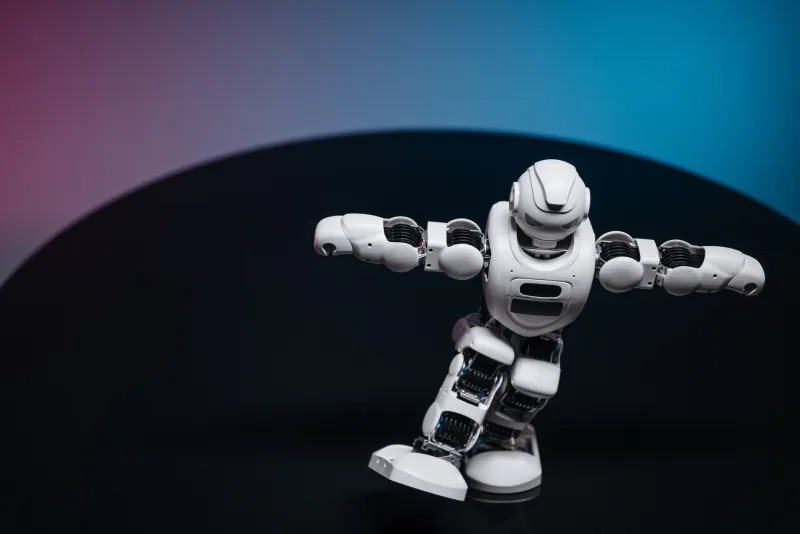
Photo: eerie humanoid robot close up face unsettling blinking, via thumbs.dreamstime.com
There's a moment in Hollow Stride — you've probably seen the clip even if you've never played it — where the main character, a bipedal maintenance bot named CASS, turns toward the camera and blinks. Just once. Half a second too slow. The forums exploded the day that trailer dropped. "Burn it," someone wrote. That post got 47,000 upvotes.
The game sold 1.2 million copies in its first weekend.
The Pitch Nobody Wanted to Greenlight
Marco Velletti, the creative director at Portland-based studio Ferrous Loop, didn't set out to make players uncomfortable. He set out to make them feel something. There's a difference, and it took him three years of failed prototypes to understand it.
"Every robot we built early on looked like something Sony or Valve would be proud of," Velletti told us over a video call, a whiteboard full of skeletal wireframes visible behind him. "Clean lines, expressive eyes, satisfying movement arcs. And every single playtester said the same thing: 'cool.' Just cool. Not scared, not invested — cool. That word started haunting me."
The pivot came by accident. A junior animator miskeyed a timing value on CASS's idle animation, making her neck rotation lag about 80 milliseconds behind her head movement. The internal Slack channel lit up with complaints. Velletti told them to leave it in.
"That was the first time anyone in a playtest said they felt nervous," he said. "Not about the gameplay. About her."
Discomfort as a Distribution Strategy
Here's what the traditional game marketing playbook doesn't account for: friction drives sharing. A polished robot is something you admire and move on from. A robot that looks almost right is something you screenshot, post, tag your friends in, and argue about in comment sections for three days straight.
Ferrous Loop didn't have a marketing budget that could compete with mid-tier studios, let alone the big publishers. What they had was a character that people couldn't stop talking about — and not always kindly. Reddit threads debating whether CASS's eye-tracking was intentionally broken generated more organic impressions than a paid campaign would have bought.
Velletti points to a specific metric his team tracked obsessively: "hate-watch hours." Streamers who genuinely disliked CASS's design kept playing anyway — kept streaming anyway — because their audiences were fascinated. One Twitch creator with 200,000 followers did a 14-hour marathon specifically to catalog every moment CASS moved wrong. That VOD has 3.4 million views.
"We didn't pay for that," Velletti said, laughing. "We couldn't have afforded to."
The Merchandise Nobody Expected
The $40M figure — which Ferrous Loop confirmed in a press release tied to their Series B funding announcement — doesn't come exclusively from game sales. Roughly $6M of it traces back to merchandise, and that number is where the story gets genuinely strange.
The best-selling item in the Hollow Stride store isn't a poster or a hoodie. It's a six-inch CASS figure with a QR code on the base that, when scanned, plays a ten-second loop of her blinking animation. It retails for $34. They've sold over 175,000 units.
People are buying a small plastic object specifically to experience the thing that unsettles them. Velletti doesn't have a clean psychological explanation for it. "I think people want to own the thing that got them," he offered. "Like a trophy. Proof that they felt something real."
The licensing deals have followed. An apparel brand known for horror-adjacent streetwear approached Ferrous Loop six months after launch. A tabletop miniatures company is currently in negotiations. There's a graphic novel in development that Velletti is cagey about but clearly excited by.
What the Numbers Actually Prove
The gaming industry spends enormous energy chasing prestige aesthetics — hyperrealistic textures, motion-captured performances, fluid animation that reads as "cinematic." The implicit assumption is that players reward technical polish with their wallets.
CASS is a pretty direct argument against that assumption. She's not technically impressive. Her geometry is deliberately lo-fi by modern standards. Her animations are broken on purpose. And she outperformed a dozen better-looking robot protagonists that launched in the same 18-month window.
The counterargument from bigger studios is usually that Hollow Stride got lucky — that the viral moments were flukes, not strategy. Velletti's response to that framing is blunt.
"Luck is when something happens once. When the same psychological trigger fires the same reaction across millions of different people, across different cultures, different languages, different gaming contexts — that's not luck. That's a design principle you just haven't written down yet."
The Imitators Are Already Here
Three games announced at last year's indie showcases feature protagonists with deliberately off-timing animations. Two of them have cited Hollow Stride publicly as an influence. One hasn't, but the debt is obvious to anyone who's played both.
Velletti isn't precious about it. "Good," he said. "Figure it out. But here's what I'll tell you for free: copying the symptom doesn't give you the cause. You can't just make a robot blink weird and expect $40M. The discomfort has to come from somewhere true. Ours came from three years of understanding exactly why we were afraid of her."
CASS 2.0 is in early development. Velletti won't say much, except that the team has spent the last six months studying the specific neurological research on uncanny valley responses — not to fix the problem, but to go deeper into it.
"We're not trying to make her less wrong," he said. "We're trying to understand exactly how wrong she needs to be."
Forty million dollars says they're asking the right question.