Glitch Hunters: The Speedrunners Chasing the Exact Moment Realistic Robots Stop Making Sense
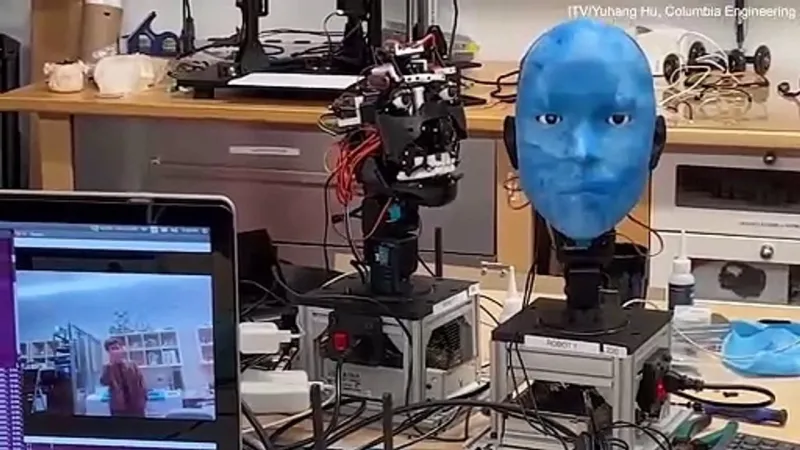
Photo: humanoid robot animation glitch uncanny valley game engine character broken pose, via s1.dmcdn.net
The clip is 47 seconds long and it has nearly two million views. In it, a photorealistic android in a 2023 AAA action game walks calmly toward a doorframe, clips slightly through the geometry, and then — for exactly 11 frames — contorts into something that has no name in human anatomy. Limbs at wrong angles. Eyes tracking something that isn't there. A smile that doesn't belong on anything that was ever designed to smile.
The person who found it didn't stumble across it accidentally. They spent six hours engineering that exact moment.
"People kept calling it a glitch," says the runner, who goes by the handle Fracture_State and streams out of Portland, Oregon. "It's not a glitch. It's a destination."
Welcome to uncanny valley speedrunning — arguably the strangest and most psychologically loaded subculture in competitive gaming right now.
What These Runners Are Actually Doing
Traditional speedrunning is about time. Get from point A to point B faster than anyone else, using every exploit, skip, and system abuse available. The clock is the judge.
Uncanny valley runners operate by a completely different metric. Their goal is to push a game's humanoid or near-humanoid robot characters past the edge of their design parameters — to find the exact input sequence, geometry interaction, or physics state that breaks the illusion of realism and produces something genuinely disturbing.
The result isn't measured in seconds. It's measured in the visceral wrongness of what appears on screen.
"There's a specific quality to a perfect find," says Maya Chen, one of the most-followed practitioners of this style, who has built a dedicated audience on Twitch over the past 18 months. "It's not just broken. It has to feel wrong in a way that's hard to articulate. Like the game is showing you something it wasn't supposed to know."
Chen's most-viewed clip involves a humanoid security robot in a stealth game that, when caught in a specific doorway interaction while mid-turn, enters a locomotion state where it walks with perfect posture while its head faces fully backward. The robot's behavior logic continues normally. It patrols. It investigates sounds. It does everything it's supposed to do. Its head just stares directly behind it the entire time.
The chat during that stream went silent for a full three seconds before erupting. That silence is what these runners are chasing.
The Psychology of Breaking the Illusion
To understand why this is compelling rather than just technically interesting, you have to understand what the uncanny valley actually does to a human brain.
The phenomenon — first described by roboticist Masahiro Mori in 1970 — refers to the dip in human comfort that occurs when something artificial gets close to, but doesn't quite achieve, human appearance. The closer the approximation, the more disturbing the small failures become. A cartoon robot doesn't trigger the response. A near-perfect android does.
Game developers building photorealistic robot characters are walking a tightrope over that valley constantly. When everything works, the result is impressive — immersive, even. When something breaks, the result is a direct line to one of the human brain's oldest alarm systems. Something wrong. Something wrong.
Uncanny valley runners are essentially engineers of that alarm response. They're finding the exact inputs that knock a character off the tightrope and watching it fall.
"There's a thrill to it that I find hard to explain to people outside the community," says Fracture_State. "It's not horror exactly. It's more like... you've seen behind the curtain and the thing behind the curtain is worse than what's in front of it. And you put it there. You made that."
The creative ownership element is significant. These runners aren't passively encountering glitches. They're deliberately constructing specific states of wrongness, which gives the experience a quality closer to performance art than to traditional gaming.
What the Engines Are Actually Doing
From a technical standpoint, what happens when humanoid robot animations exceed their design parameters is genuinely fascinating — and the game engines' responses are often weirder than the inputs that triggered them.
Modern character animation in AAA games runs on layered systems: a base locomotion layer, an upper-body override layer, inverse kinematics corrections for surface contact, facial animation rigs, and procedural secondary motion for things like hair and clothing. Under normal conditions, these layers communicate and blend smoothly. Under abnormal conditions — the kind that uncanny valley runners actively engineer — they start making independent decisions.
"The engine doesn't know it looks wrong," explains game developer and technical animator Raj Patel, who has studied several clips submitted by the community. "It's running all its systems correctly. The IK solver is trying to plant the feet. The locomotion system is trying to move the character. The look-at system is trying to track the player. When they get conflicting inputs, they don't fail. They all succeed simultaneously. And that's the horror."
The backward-facing head in Chen's clip isn't a crash or a null state. It's the look-at system correctly tracking the player while the locomotion system correctly executes a patrol route. Both systems are working. The result looks like something from a nightmare.
The Community Building Around the Chaos
What's remarkable about this subculture is how quickly it's developed its own vocabulary, taxonomy, and competitive structure — even without a formal record-keeping framework.
Community members categorize finds by type: "joint breaks" (skeletal hierarchy failures), "ghost states" (characters occupying behavioral loops that don't match their physical position), "smile events" (facial rig failures that produce expressions outside the designed emotional range), and "mirror walks" (locomotion inversions where the character moves correctly but animates in reverse).
There are debates about which games offer the richest hunting grounds. Titles with more sophisticated animation systems generally produce more complex failures — more layers mean more opportunities for inter-system conflict. A game with a simpler rig might have a cleaner visual language but a shallower pool of possible wrongness.
Fracture_State is currently deep in a new title that shipped last month, cataloguing its android characters' failure modes with the systematic patience of an entomologist. "Every game has a vocabulary of breaks," they say. "You spend the first few weeks just learning the grammar. Then you start writing sentences."
The clips keep coming. The chat keeps going silent at all the right moments. And somewhere in a game engine's tangled web of animation systems, there's always another frame where something stops making sense — waiting for someone patient enough to find it.