Glitched Out and Beloved: The Strange Psychology of Rooting for Broken Robot AI
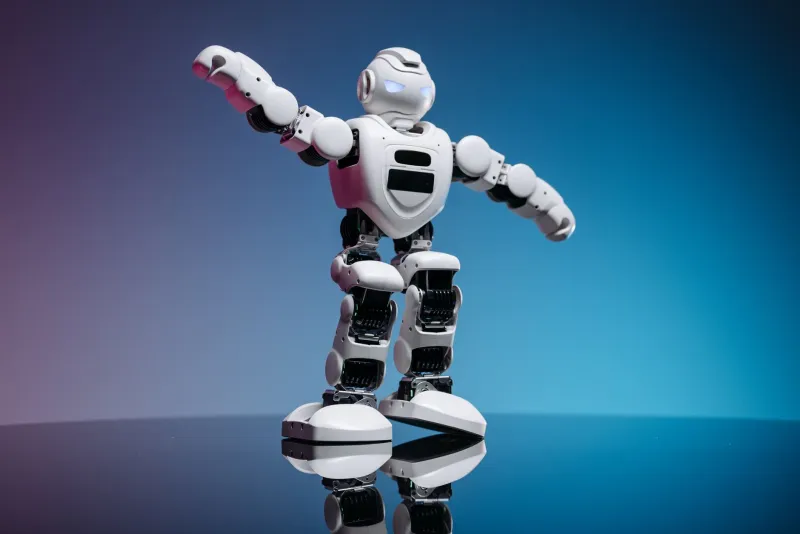
Somewhere between a perfect kill and a catastrophic misfire, something unexpected happens. The robot stumbles. It hesitates. It does something it absolutely should not do — and suddenly, you're not trying to destroy it anymore. You're kind of rooting for it.
This isn't a rare experience. Across competitive gaming communities, from fighting game Discord servers to strategy game subreddits, players have been quietly developing genuine emotional attachments to AI opponents whose code is, to put it charitably, a total mess. It's weird. It's counterintuitive. And it's one of the most fascinating psychological phenomena happening in gaming culture right now.
When Bad AI Becomes Good Drama
Competitive gaming is built on the premise of clean, predictable opposition. You want to beat something fair. You want the challenge to make sense. So why does a robot that freezes mid-combo, pathfinds itself into a wall, or executes a completely nonsensical attack pattern end up generating more fan art, more clip compilations, and more genuine community affection than the polished, ruthlessly efficient enemies that actually test your skills?
Part of the answer lies in what psychologists call anthropomorphization — the human tendency to assign personality and intent to non-human things. When an AI behaves perfectly, it reads as a system. When it behaves imperfectly, it reads as a character. The glitch becomes a quirk. The pathfinding failure becomes a personality trait. Suddenly, that busted combat drone isn't a broken subroutine — it's the underdog with a screw loose who keeps showing up anyway.
Gaming communities have an almost primal instinct to narrative-ize this stuff. A robot that occasionally walks off a ledge for no reason doesn't stay broken for long in the community's imagination. Within 48 hours, it has a name, a backstory, and a dedicated fan base on Twitter arguing about whether its self-destructive behavior is actually a coping mechanism.
The Streaming Effect
Streaming culture has turbocharged this phenomenon in ways that are hard to overstate. On Twitch and YouTube, malfunctioning robot AI isn't just a curiosity — it's content gold. Clip culture rewards the unexpected, the absurd, and the emotionally resonant, and a glitchy robot opponent delivers all three simultaneously.
Watch any major fighting game or mech combat stream long enough and you'll see it happen live. A robot boss does something inexplicable — charges directly into a corner, repeats the same ineffective attack six times in a row, or just... stops. Chat explodes. The streamer loses their mind. And then, almost universally, there's a moment of hesitation before the finishing blow. Because now the thing has a soul, apparently.
These clips don't just go viral. They generate loyalty. Viewers come back specifically to see if the broken bot does something weird again. They develop parasocial relationships with AI that can't, by definition, know they exist. It's parasocial behavior at its most absurd — and most human.
Imperfection as Intimacy
Here's the part that gets genuinely interesting from a psychological standpoint: research on human-robot interaction has consistently shown that slight imperfection makes artificial entities feel more relatable and trustworthy than flawless ones. This is the flip side of the uncanny valley — instead of near-perfect humanoid robots triggering revulsion, near-perfect AI behavior triggers emotional distance.
A robot that always makes the optimal decision is a calculator. A robot that occasionally makes the wrong decision — especially in a way that feels vaguely motivated — triggers something closer to empathy. We are wired, at a deep level, to connect with things that fail. Because we fail. All the time. Failure is the most universal human experience there is, and when a machine mirrors it back at us, even accidentally, something clicks.
This is why the broken AI in competitive gaming hits different than a well-designed NPC with scripted vulnerability moments. The glitch isn't written. It isn't curated. It's just... there. And that randomness, that genuine unpredictability, is paradoxically more convincing as a signal of inner life than any amount of intentional design.
The Competitive Community Paradox
What makes this especially strange is that it's happening inside competitive communities — spaces that are, by design, oriented toward optimization, mastery, and winning. These are not casual players who get emotionally attached to everything. These are people who spend hours frame-counting and studying matchup data.
And yet. Post a clip of a busted mech boss doing something inexplicably human-like to a fighting game subreddit, and the responses are not analytical. They're affectionate. People talk about the robot like it's a friend who's having a rough day. They make jokes that assume interiority — that the machine is trying, even if it keeps failing.
This is the neural uncanny valley in action. The robot has crossed some invisible threshold where its dysfunction reads not as a flaw in the system but as evidence of a self. The competitive player's brain, trained to read intent in opponent behavior, simply cannot help but find intent — even where there is none.
What Developers Are (Quietly) Figuring Out
Game studios are starting to pay attention to this dynamic, even if they're not always vocal about it. There's a growing conversation in game design circles about intentional imperfection — deliberately introducing variance and apparent inconsistency into AI behavior to create the illusion of personality without sacrificing competitive integrity.
It's a delicate balance. Too much randomness and the AI becomes genuinely unfair. Too little and it stays a system. But land in the right zone and you've got something players will talk about for years — not because it was hard to beat, but because it felt like something.
Some of the most beloved robot antagonists in gaming history have been beloved precisely because they felt slightly off. Not broken enough to be frustrating. Just broken enough to feel real.
The Machine That Made You Feel Something
At the end of the day, what this phenomenon reveals is less about robots and more about us. We are meaning-making creatures. We find stories in cloud shapes and faces in wood grain, and we will absolutely find souls in malfunctioning combat AI if you give us half a chance.
The broken robot opponent isn't actually alive. It doesn't have goals or fears or a bad day it's trying to push through. But it behaves in ways that rhyme with aliveness — and that's enough. That's more than enough.
Next time you're in a competitive match and the enemy bot does something completely unhinged and inexplicable, notice what happens in your chest before you go in for the kill. That flicker of hesitation? That half-second where you almost want it to get away?
That's the neural uncanny valley. And you're already living in it.