Two Million Dollars, Zero Viewers: How a Robot Esports Spectacle Imploded in Real Time
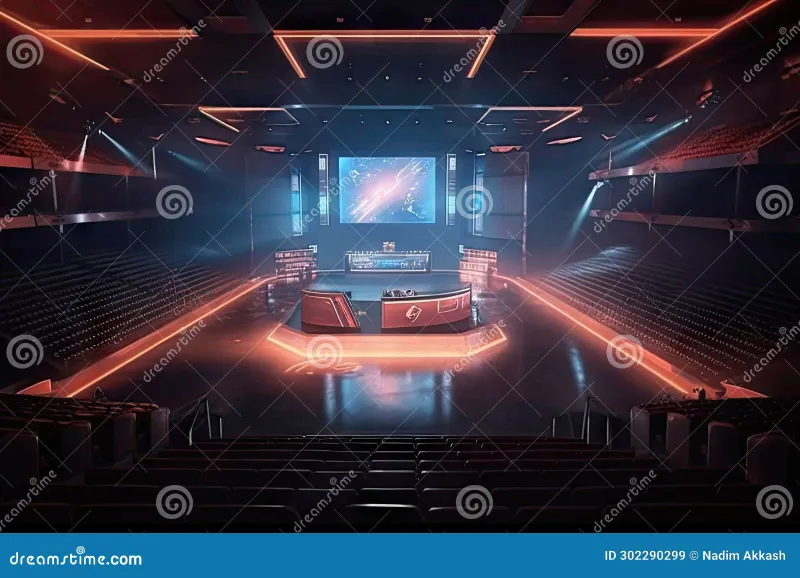
Photo: empty esports arena stage tournament large screen no audience, via thumbs.dreamstime.com
Let's just say the number out loud: at its peak concurrent viewership, the APEX Mechanica Championship — a $2 million robot gaming tournament backed by one of the largest publishers in North America — drew approximately 11,000 live viewers across all platforms combined.
For context, a mid-tier Minecraft streamer on a random Wednesday pulls more than that.
The APEX Mechanica Championship was supposed to be the moment robot esports went mainstream. Instead, it became the industry's most expensive cautionary tale — a masterclass in how to spend a fortune building something nobody wanted to watch. Let's go through it, category by category, because the failure was thorough enough to deserve a full autopsy.
The Game Nobody Had Actually Played
Problem #1: The audience didn't exist yet.
APEX Mechanica, the game the tournament was built around, had been in early access for seven months at the time of the championship. Its Steam player count peaked at around 28,000 concurrent users — respectable for an indie-adjacent title, but nowhere near the install base needed to sustain a major esports event.
The publisher, operating on the logic that a big tournament would create the audience rather than serve an existing one, pushed forward anyway. This is a mistake that gets made repeatedly in esports, and it almost never works. Tournaments don't build communities. Communities build tournaments. The order of operations matters enormously.
"They were trying to manufacture hype for a game that hadn't had time to develop organic hype," says esports analyst and consultant Derek Foss, who was not involved with the event but has studied its collapse extensively. "You can't buy a fanbase into existence. You can rent their attention for a weekend, maybe. But you can't manufacture the kind of investment that makes someone wake up early to watch a match."
The Robot AI Was Boring to Watch
Problem #2: The spectacle didn't spectate.
This one is harder to admit, but it's probably the most important factor. The robot opponents in APEX Mechanica — the central hook of the game's competitive mode — were technically sophisticated but visually inert. Their behavior trees were complex. Their decision-making was, by gaming AI standards, genuinely impressive. But watching them on a broadcast was like watching someone do a spreadsheet.
The robots moved efficiently. They repositioned logically. They didn't do anything stupid, flashy, or emotionally legible. There were no dramatic near-misses, no unexpected aggression, no moments where the machine seemed to want something. The best esports content — human or AI — requires readable stakes. Viewers need to feel like they understand what's happening and why it matters.
APEX Mechanica's robot AI was optimized for competitive depth, not broadcast drama. Those are different design targets, and nobody had reconciled them before putting the game in front of a camera.
"The robots were too good in the wrong ways," says Cassidy Ohr, a game designer who reviewed the tournament footage for an industry newsletter. "Competitively, their behavior was sophisticated. Visually, it was sterile. There's nothing to root against if the enemy doesn't seem like it's trying to win."
The Marketing Spoke to Nobody Specifically
Problem #3: The campaign was loud and empty.
The promotional push for the APEX Mechanica Championship was extensive and almost impressively generic. Billboard placements in three major cities. Sponsored segments on two gaming podcasts. A trailer with a nine-figure production value that featured exactly zero actual gameplay footage.
The messaging leaned heavily on the phrase "the future of competitive gaming" — which is a sentence that means nothing to anyone. It didn't speak to existing APEX Mechanica players, who were a small and fairly niche community. It didn't speak to general esports fans, who had no frame of reference for the game. And it actively alienated the hardcore robot gaming community, who found the glossy corporate aesthetic off-putting and inauthentic.
There was no identified audience. There was just a budget and a deadline.
The Broadcast Was a Production Disaster
Problem #4: The show itself was rough.
Even setting aside the audience problem, the live broadcast had significant execution failures. Commentary talent had been briefed on the game for less than two weeks and frequently misidentified mechanics on air. Technical delays pushed the main event back by nearly 90 minutes. The overlay design obscured key visual information during matches. A segment intended to explain robot AI behavior to new viewers ran for eleven minutes and was widely described in real-time chat as "incomprehensible."
The broadcast peaked at 11,000 concurrent viewers during the opening ceremony, then declined steadily through the entire event.
What Comes Next Has to Learn From This
The APEX Mechanica Championship didn't fail because robot esports is a bad idea. It failed because the people running it confused investment with preparation.
The upcoming Ferrous Circuit Invitational and the newly announced Machine Wars Pro Series are both watching the wreckage closely. Sources inside both organizations say the lessons are clear: build the community first, design the AI for broadcast drama as well as competitive depth, and market to a specific person rather than a theoretical mass audience.
Two million dollars is a steep price for a lesson that should have been obvious. But if the robot gaming space actually absorbs it, the money might not be entirely wasted.
Might.