Meet Your Worst Opponent: You — The Rise of AI Clones in Competitive Gaming
Somewhere in a practice server right now, a professional esports player is losing to themselves. Not metaphorically. Not in the "you're your own worst enemy" motivational poster sense. Literally losing, in real time, to an AI-controlled avatar trained on their own gameplay data — their inputs, their timings, their tendencies, their tells.
Welcome to the new frontier of competitive prep, where the robots you're fighting look a lot like you.
The Arms Race Nobody Announced
It started, as most things in competitive gaming do, with someone trying to get an edge.
A handful of top-tier players — mostly in fighting games and tactical shooters, though the trend is bleeding into other genres — began experimenting with behavior-cloning systems roughly two years ago. The concept is straightforward in theory: feed an AI system hours of your own gameplay footage and input data, let it model your decision patterns, and then deploy that model as an opponent you can practice against at any hour, in any condition, with zero scheduling friction.
No scrimmage partner needed. No coach required. Just you and the machine that learned to be you.
"The first time I ran a session against my own clone, I won pretty easily," says Marcus D., a ranked fighting game competitor based in Atlanta who agreed to talk on record. "Then I lost the next three sets. It had already started adapting. That was a weird moment."
Weird is a word that comes up a lot in these conversations.
Why the Old Training Methods Weren't Enough
To understand why players went this direction, you have to understand how brutal the prep cycle is at the top level of competitive gaming. Traditional practice involves grinding ranked matches, reviewing VODs, running drills with teammates, and scheduling scrimmages against other professional squads — who may or may not show up, may or may not be running their actual strategies, and are certainly not available at 2 AM when your read on a matchup suddenly clicks and you want to test it immediately.
AI sparring partners have existed for a while, but most of them are built to simulate generalized opponents. They're useful for fundamentals, less useful for the hyper-specific meta adjustments that separate top-eight finishers from champions. What players wanted was something that could replicate the exact kind of pressure a specific human opponent creates — the rhythm of their aggression, the timing of their defensive habits, the particular flavor of mistakes they make under stress.
A clone of yourself is, paradoxically, a decent proxy for that. Your tendencies are known quantities. Your clone will pressure you the way you pressure others. Training against it surfaces your own defensive gaps in a way that generic AI opponents simply can't.
The Psychological Toll Nobody Warned Them About
Here's where the steel starts to feel a little cold.
Several players who've spent significant time training against self-clones describe a creeping psychological effect that nobody fully anticipated. Watching an AI replicate your playstyle with high fidelity is, by multiple accounts, profoundly disorienting in a way that's hard to articulate until you've experienced it.
"It knows when I'm about to hesitate," says one tactical shooter player who asked to remain anonymous. "I'll be in a scenario where I always second-guess myself, and the clone plays around that hesitation perfectly. It's not scary because it's beating me. It's scary because it knows something about me that I didn't consciously know about myself."
Sports psychologists who work with esports athletes are starting to flag this as a genuine concern. Confronting a highly accurate behavioral model of yourself — one that exposes your weaknesses with clinical precision — can accelerate performance anxiety rather than reduce it. A few players have quietly stepped back from clone training after finding that sessions left them second-guessing their own instincts mid-match, unable to separate their natural decision-making from what they'd observed the clone doing.
There's also the identity dimension, which sounds abstract until you sit with it. If a system can replicate your playstyle well enough to be a credible training partner, what exactly does that say about how mechanical your "individual" style actually is? It's a question competitive players tend not to love.
The Opponent Study Problem
The self-clone dynamic gets significantly more complicated when players start building clones of each other.
And yes, that's happening.
Several teams have reportedly begun constructing behavioral models of rival players using publicly available match footage and input data scraped from tournament replays. The models aren't perfect — public data is less granular than first-person input logs — but they're apparently good enough to be useful. You can run thousands of practice rounds against a rough approximation of your upcoming opponent's tendencies before the two of you ever sit down at a tournament table.
The ethical questions here are not small. Players whose likenesses and behavioral data are being modeled haven't necessarily consented to that process. There's no established rulebook in competitive gaming — or really anywhere — governing whether it's acceptable to build and deploy a behavioral clone of a rival athlete for training purposes. Tournament organizers are largely unprepared for the conversation.
"If I record you playing and study your VODs, that's normal prep," Marcus D. points out. "If I build an AI that plays like you and I grind 500 hours against it before we meet in bracket — is that different? I genuinely don't know."
What Comes Next
The technology is only going to get more precise. Input capture systems are improving. Behavior-cloning models are becoming more accessible to players who aren't on fully funded rosters with dedicated technical staff. Within a few years, building a playable AI approximation of yourself — or someone else — will likely be a standard part of competitive preparation across multiple genres.
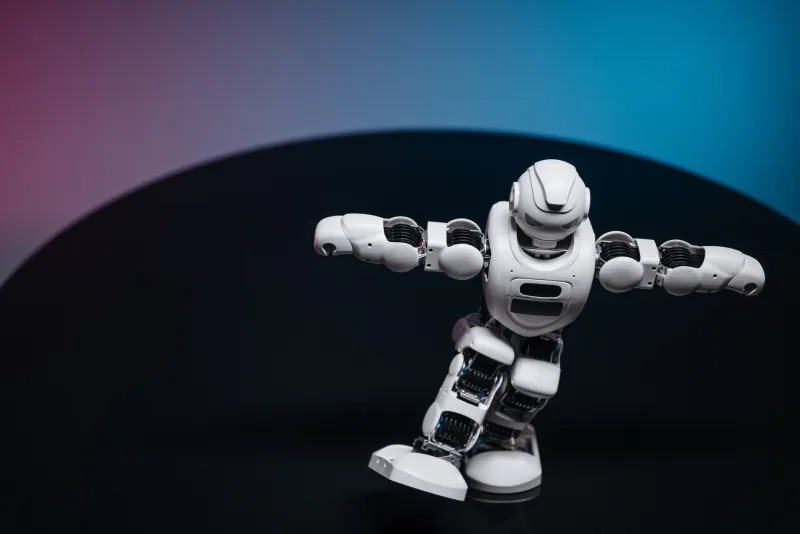
The flesh-and-steel metaphor has never been more literal. The robots aren't replacing competitive gamers. They're becoming competitive gamers — trained on human data, shaped by human habits, deployed against human opponents in a loop that keeps tightening.
And somewhere in that loop, the line between the player and the machine they built to simulate the player starts to blur in ways that nobody has fully figured out yet.
The arms race is on. The question is who — or what — wins it.