The Robot That Reads Your Mind — and Why Pro Gamers Are Terrified of It
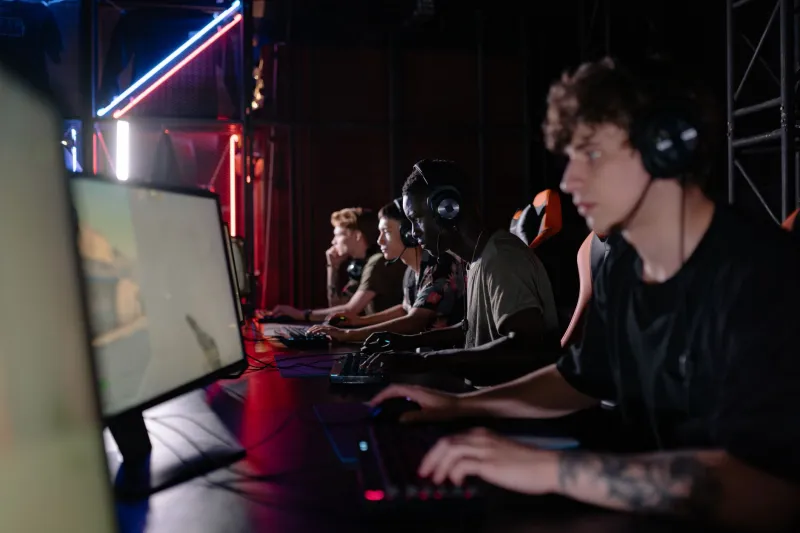
Imagine grinding ranked matches for six hours straight, slowly building a read on your opponent's tendencies, and then having the game's AI opponent calmly announce — through its behavior, not its words — that it already had a read on you three hours ago. That's the experience an increasing number of competitive players are describing when they run into the new generation of adaptive AI opponents. And "terrified" might not be too strong a word.
This isn't about AI that gets faster or hits harder. That's old news. The new generation learns. It watches. It adapts. And the competitive gaming community is having a full-blown identity crisis about what that means.
What Adaptive AI Actually Does
Let's be precise here, because the term gets thrown around loosely. Traditional difficulty scaling in games is mostly cosmetic — enemies absorb more damage, move faster, react quicker. The underlying decision logic stays the same. You're fighting the same robot with more hit points.
Adaptive AI is structurally different. These systems maintain a running behavioral model of the player — tracking things like preferred attack angles, dodge timing, resource management habits, aggression patterns during low health, and response latency on specific input sequences. The AI then uses that model to make decisions that specifically exploit what it's learned.
Dr. Priya Nambiar, a machine learning researcher at Carnegie Mellon who consults for two game studios she's not allowed to name, describes it this way: "The system isn't just reacting to what you're doing right now. It's predicting what you're likely to do next based on your history. That's a qualitatively different kind of opponent."
Games shipping with versions of this tech include the recent robot combat title Dominion Protocol, the tactical shooter Zero Frame, and — most controversially — the fighting game Apex Iron, which used an adaptive opponent system in its ranked ladder before competitive players revolted loudly enough to get it pulled from tournament mode.
The Pro Gamer Perspective: This Isn't Fair
Talk to top-level competitive players and the objections come fast and sharp.
Marcus "Coldwire" Trent, a top-20 ranked player in Apex Iron and a regular on the regional circuit, doesn't mince words: "A human opponent learns your patterns too, but they're limited by their own cognition. They misread things. They have bad days. They get nervous. An AI that's cataloging every input you've made across 200 matches and building a perfect counter? That's not a player. That's a surveillance system with a health bar."
The fairness argument has a few layers. First, there's the question of data — adaptive AI in online environments can potentially train on thousands of matches across the entire player population, not just the individual session. That means by the time you sit down to play, the AI may already have a model built from players who share your tendencies. You're not just fighting the machine. You're fighting an aggregate of everyone who played before you.
Second, there's the issue of countermeasures. Against a human, you can adjust your playstyle mid-match and the human has to consciously recognize the change and adapt. Against a well-built adaptive system, the AI's adjustment can be near-instantaneous. "It's not a fight anymore," Coldwire said. "It's a lockout."
The Researchers Disagree — Politely
Dr. Nambiar pushes back on some of this, though she acknowledges the concerns are legitimate. "The argument that adaptive AI is unfair assumes the goal is to create a beatable opponent," she said. "But a lot of design teams are using these systems to create a mirror — something that forces players to confront their own habits and break them. That's actually a very sophisticated training tool."
She points to chess engines as a historical reference point. When programs like Deep Blue and later Stockfish became unbeatable, the competitive chess world didn't collapse — it adapted. Players use AI opponents specifically because they're ruthless pattern-counters. The training value is precisely what makes them uncomfortable.
The difference, critics argue, is that chess engines aren't deployed in competitive ranked ladders against human players who are trying to climb. Using an adaptive AI as a training partner in a private mode is one thing. Shipping it as a ranked opponent in a live game is another.
The Backlash Is Already Reshaping Game Design
The Apex Iron situation is the clearest case study. When the game's developer, Helion Studios, rolled adaptive AI into the ranked queue as part of a "dynamic challenge" update, the reaction from the competitive community was immediate and organized. Top players coordinated a boycott of ranked play, streamers refused to feature the mode, and a 40,000-signature petition hit the studio's forums within a week.
Helion pulled the feature from ranked within 11 days. They kept it in a dedicated single-player "Gauntlet" mode, which, somewhat ironically, became one of the most-streamed modes in the game's history. Watching an AI dismantle a skilled player's habits in real time turns out to be genuinely compelling content.
Other studios are watching and calibrating. Several developers have told industry press they're building adaptive systems but planning to quarantine them outside competitive modes — at least until the community conversation matures.
The Real Question Nobody Wants to Answer
Here's the tension at the center of all this: adaptive AI opponents are, by most technical measures, better at testing skill than static ones. They close the gap on exploitable patterns, force genuine adaptation, and create a ceiling that scales with the player. For solo players trying to genuinely improve, they're arguably the most valuable opponent design in gaming history.
But competitive gaming isn't just about testing skill in isolation. It's about human competition, community, and the shared understanding that everyone is playing under the same rules against the same opponent. When the opponent learns you specifically, that social contract gets complicated.
Dr. Nambiar's parting thought on the subject was characteristically measured: "We're building opponents that are better at being opponents than humans are. Whether that's what games should do is a design question, not a technical one."
Coldwire's version was less measured: "I didn't get good at this game to lose to a machine that studied my bathroom breaks."
Both of them are right. That's the problem.