Fear Architects: The Modders Engineering Their Own Robot Nightmares

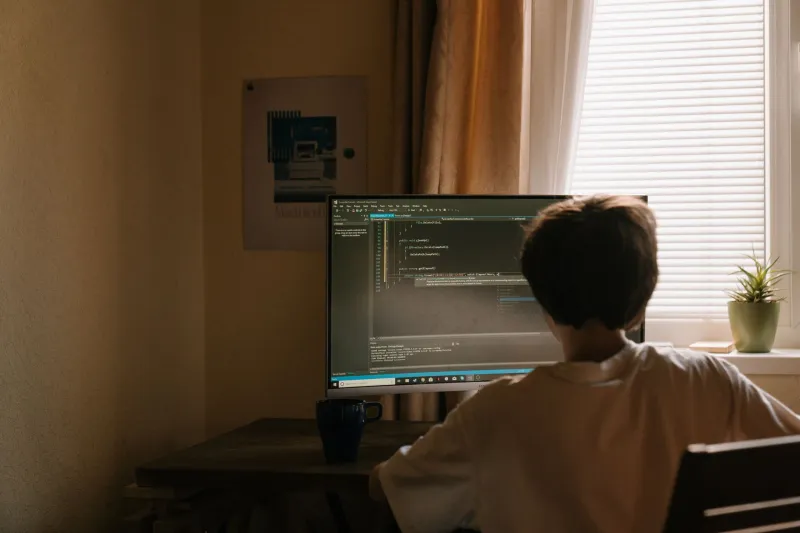
Photo: dark moody computer screen showing game modding code with robot enemy on screen, via static1.colliderimages.com
Most people play horror games to get scared. A specific, fascinating subset of players finds that insufficient. They finish the horror game, decide it wasn't quite right — not personal enough, not targeted precisely at the specific frequency of dread that hits them hardest — and then they open the game files and start rebuilding it from scratch.
Inside the robot gaming modding community, this impulse has spawned an entire underground discipline. Call them fear architects. These are the players who aren't satisfied with what developers put on the disc. They want to engineer their own psychological breaking points, custom-tuned to their own specific brand of anxiety. And they're getting very, very good at it.
What "Modding the Nightmare" Actually Looks Like
The technical side of this community ranges from accessible to jaw-dropping. At the entry level, you've got texture and animation swaps — replacing a robot enemy's standard movement cycle with something jerkier, more erratic, or subtly wrong in ways the original designers never intended. These are the mods that show up on YouTube as "this game is now terrifying" and rack up a few million views from people who have no interest in installing them personally.
Deeper in, you hit the behavior modders. These are the players rewriting enemy AI decision trees — changing the conditions under which a robot enemy will pursue you, the speed at which it escalates aggression, the sensory inputs it uses to detect your presence. One widely circulated mod for a popular mech-horror title replaced the standard enemy detection system with a purely audio-based one. The robot couldn't see you. It could only hear you. The community's reaction when it dropped was immediate and visceral: clips of players standing completely still, barely breathing, while a machine hunted them by sound alone.
"That mod broke people," says Terrance Webb, a streamer based in Atlanta who covers horror gaming and modded content. "Not in a bad way. In the way that good horror is supposed to break you. People were genuinely stressed out in a way the base game never achieved."
The Psychology of Voluntary Terror
Why would anyone do this to themselves? It's worth sitting with that question for a second, because the answer is more nuanced than "some people just like being scared."
The modders themselves are remarkably articulate about their motivations. The recurring theme isn't masochism — it's control. There's something deeply specific about choosing the shape of your fear, engineering the exact parameters of the experience that unsettles you most. It's the difference between being scared by something that happens to you and being scared by something you built. The latter comes with a strange sense of authorship, even ownership.
"I know exactly what scares me," says a modder who goes by the handle Voidframe and has been building horror modifications for robot games for about three years. "I know the specific visual — a robot that moves like it's injured but doesn't register pain. That limping, relentless thing. The base game has something like it, but it wasn't quite right. So I tuned it. I changed the gait animation, tweaked the damage response so it doesn't react to hits visually. Now it's exactly the thing that gets under my skin. And that sounds insane, but it's actually really satisfying."
Voidframe's mods have been downloaded over 40,000 times. Clearly, what gets under his skin gets under a lot of other people's skin too.
The Streamer Economy Around Modded Robot Horror
Content creators have been quick to recognize what this community produces as premium streaming material. Modded robot horror content performs exceptionally well on Twitch and YouTube — the combination of familiar game framework plus unexpected, custom-engineered dread is catnip for audiences.
Webb has built a significant portion of his channel around playing community-built horror mods, and he's thoughtful about why it works. "When I play a horror game straight, my audience has often already seen it. They know the jump scares. They know the pacing. But when I play a community mod, nobody knows what's coming — including me. The authenticity of my reaction is real because I genuinely don't know what this thing is going to do."
That unpredictability is central to the appeal. The modding community has gotten sophisticated enough that even experienced horror game streamers can't predict or anticipate what a well-built behavior mod will produce. Robot enemies that shouldn't be able to follow you into certain areas suddenly can. Machines that are supposed to patrol fixed routes start improvising. The rules break in exactly the ways the modder designed them to break.
The Technical Craft Behind the Fear
Spending time in the modding forums where this community operates reveals a surprisingly rigorous technical culture. These aren't casual hobbyists slapping texture replacements together. The deeper end of the community involves serious programming work — scripting custom behavior trees, manipulating physics parameters, and in some cases rewriting substantial chunks of enemy AI logic.
Some of the more technically advanced projects have involved creating entirely new enemy types by splicing together components from multiple characters in a game's existing roster. Hybrid machines that move with one character's locomotion system but use another's detection logic and a third's attack patterns. The results are frequently described by playtesters as feeling fundamentally wrong in ways that are hard to articulate — which is, of course, exactly the goal.
"There's a craftsmanship to it," says Voidframe. "You're not just making something scary. You're making something that feels like it shouldn't exist. Like a mistake that got out."
Where the Community Is Headed
The tooling available to this community is improving rapidly, and the ambitions are scaling with it. Modders are starting to experiment with procedural generation systems that create unique enemy behavior patterns each playthrough — machines that learn and adapt in ways that can't be predicted or memorized. The goal is a horror experience that's genuinely unrepeatable, where the robot nightmare you face is one that has never existed before and will never exist again.
It's an extraordinary thing to witness: a community so committed to the experience of fear that they've essentially become game developers in their own right, building tools and techniques that the industry itself is starting to pay attention to.
Some studios have begun reaching out to prominent horror modders — not to shut them down, but to hire them. The fear architects are going pro. The nightmare is becoming a career.