Feel Every Hit: How Haptic Tech Is Making Robot Games Punch You Back
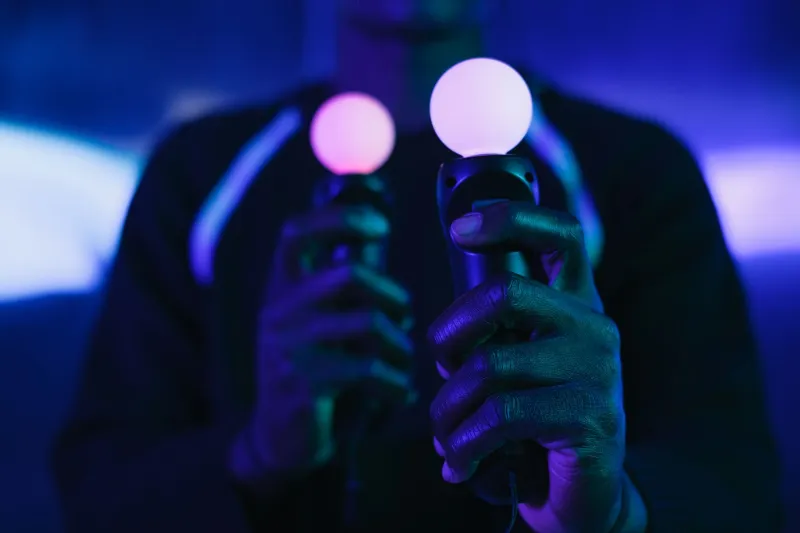
There's a moment in Iron Breach: Mech Uprising — a mid-tier robot brawler that's quietly become a cult obsession in competitive circles — where your mech takes a direct plasma cannon hit to the chest. The screen shakes. The audio cracks. And if you're wearing the right gear? Your ribcage vibrates like you just got t-boned at a stoplight.
Welcome to the new frontier of haptic feedback. It's not subtle. It's not gentle. And depending on who you ask, it's either the greatest evolution in gaming hardware or a lawsuit waiting to happen.
From Rumble Packs to Full-Body Assault
Let's back up. Haptic feedback in gaming isn't new. The Nintendo 64's Rumble Pak was janky and battery-hungry, but it kicked off a decades-long arms race to make players feel the game. Sony's DualSense controller — launched with the PS5 in 2020 — was a genuine leap forward, with adaptive triggers and nuanced vibration motors that could simulate everything from bowstring tension to gravel under tires.
But the haptic hardware hitting the market now? It's operating on a completely different level.
Companies like bHaptics, Shiftall, and a handful of aggressive startups have been quietly building full-torso haptic vests, gloves, and even leg rigs designed to sync with in-game physics engines in real time. We're talking 40 to 70 individual actuator points across your body, each one capable of delivering localized pressure, vibration, or thermal sensation depending on what's happening on screen.
For robot combat games specifically — where impacts are massive, feedback loops are fast, and the fantasy is literally being inside a war machine — this tech hits different.
The Esports Angle Nobody Saw Coming
Here's where it gets genuinely interesting. A small but growing number of competitive gaming organizations have started experimenting with haptic rigs as part of their training setups. Not for performance enhancement, exactly — more for conditioning.
The logic goes like this: if you can train your nervous system to stay calm while your body is getting battered with simulated feedback, you'll perform better under the more mundane pressure of a tournament environment. It's stress inoculation, basically. The same principle military units use when they train in loud, chaotic environments before deployment.
Some teams competing in mech-based esports titles have reportedly been running practice sessions in full haptic suits, taking turns piloting and getting pelted with feedback while coaches monitor heart rate and reaction time. Whether it actually works is still up for debate — the data is thin and most orgs aren't exactly publishing their training methodologies — but the fact that it's happening at all says something about where competitive gaming culture is headed.
The Home Gamer Experience: Chaotic and Kind of Incredible
For regular players, the haptic rabbit hole is just as deep, if considerably messier.
Take the bHaptics TactSuit X40. It's a consumer-grade haptic vest that runs around $500, syncs with PC and console via Bluetooth, and has native support for a growing list of titles. Strap it on during a robot brawler and you'll feel every dodge, every block, every catastrophic mech collision as a physical event distributed across your torso.
Users on Reddit's r/Haptics and various Discord servers have been logging their experiences for months, and the reports range from "this is the most immersive thing I've ever felt" to "I knocked over my TV stand during a boss fight and I'm not even embarrassed."
The immersion is real. So is the chaos. One user described wearing a haptic vest and leg rigs during a particularly brutal ranked match in a mech combat sim, only to realize mid-session that his dog had been losing its mind for twenty minutes because it thought something was attacking him. Another reported that the feedback from a sustained missile barrage was intense enough to make him drop his controller — which, in a competitive context, is a pretty significant design flaw.
Developers Are Paying Attention — Carefully
The studios building robot and mech games aren't ignoring this. Some are actively designing around it.
Developers working in the mech combat space have started talking about "haptic scripting" as a legitimate part of the design pipeline — essentially choreographing physical feedback the same way you'd score audio or time a visual effect. The goal isn't just intensity. It's specificity. A graze from a laser cannon should feel different from a direct hit from a kinetic slug. A mech falling over should create a rolling wave of feedback across the body, not just a single buzzsaw blast.
That kind of intentional design can make haptic feedback feel less like a gimmick and more like a language. But it requires studios to actually invest in it, and right now most haptic integration is still being handled by third-party middleware rather than baked directly into game engines.
The concern from some developers isn't immersion — it's liability. There's no standard yet for how intense haptic feedback is allowed to get in consumer products. A competitive player grinding eight-hour sessions in a full haptic rig is absorbing a lot of cumulative physical stimulation. Nobody's studied the long-term effects of that, and until they do, some studios are deliberately capping their haptic output on the conservative side.
Gimmick or Game-Changer?
Honest answer? Both, depending on how it's implemented.
When haptic feedback is designed thoughtfully — when it adds information rather than just sensation — it genuinely elevates robot games into something closer to a physical sport. You're not just watching your mech take damage. You're processing it through your body, which changes how you play, how quickly you respond, and how much you care about surviving.
When it's slapped on as a marketing bullet point with no real design intention behind it, it's noise. Expensive, sometimes uncomfortable noise.
The technology is clearly ahead of the standards right now. The hardware exists to make robot combat games feel like a full-contact sport. The question is whether the industry — studios, hardware makers, esports orgs, and regulators — can build the framework around it fast enough to make it sustainable rather than just spectacular.
For now, the most honest verdict is this: haptic feedback in robot games is the most exciting hardware story in competitive gaming, and also the one most likely to end with someone filing a workers' comp claim.
Which, honestly, feels very on-brand for a genre built around giant machines destroying each other.
Strap in accordingly.