Jitter, Stare, Suffer: Why Streamers Are Modding Robots to Look Almost Human — and Hating Every Second of It
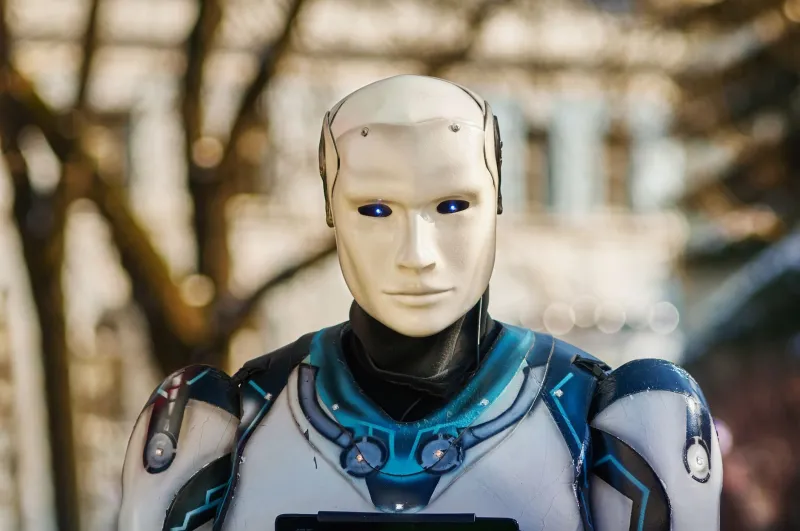
There's a specific kind of dread that lives in the space between "clearly a machine" and "wait, is that thing breathing?" Robotics researchers have had a name for it since the '70s — the uncanny valley. But competitive speedrunners have found a new use for it: content.
Over the past year, a loose collective of streamers on Twitch and YouTube has been doing something that makes absolutely no sense from a traditional speedrunning perspective. They're modding their games — titles like Titanfall 2, Horizon Zero Dawn, Armored Core VI, and even Nier: Automata — to introduce subtle, deeply unsettling animation irregularities into robot enemies. Not game-breaking glitches. Not physics exploits. Just... wrong movement. A torso that rotates a half-beat too slow. Eyes that track the player a fraction of a second after they should. A patrol route that stutters like a bad dream.
And then they run the game as fast as possible while trying not to completely unravel on stream.
This Isn't Your Normal Glitch Hunt
Let's be clear about what's happening here, because it's genuinely different from the glitch-exploitation runs that dominate speedrunning culture. Those runs are about mastery — finding cracks in a game's code and bending them to your will. This trend is almost the opposite. The runners aren't looking for an edge. They're actively making the game harder to endure.
"I've done clean runs of Titanfall 2 probably four hundred times," says Marcus "Volt_Phantom" Reyes, a Dallas-based streamer with around 80,000 followers on Twitch. "I know every beat. I know every robot. But when you tweak the animation timing just slightly — like, we're talking 200 milliseconds off on a head turn — suddenly I'm second-guessing everything. My hands know the route. My brain is somewhere else entirely."
That disconnect between muscle memory and psychological discomfort is exactly the point. These runners have spent hundreds, sometimes thousands of hours optimizing their movement through games. Their bodies have the routes memorized at a nearly unconscious level. The mods don't touch gameplay mechanics at all. They just make the robots feel wrong — and that wrongness bleeds into the runner's head at the worst possible moments.
The Audience Is the Other Half of the Experiment
Here's where it gets interesting from a streaming perspective. The chat is not a passive observer in these runs. It's a pressure multiplier.
Streamers in this niche report that their audiences have developed an almost predatory instinct for the moment the wrongness lands. Clips go viral not when a runner dies or makes a mistake, but when the camera catches that micro-expression — the slight widening of the eyes, the half-second hesitation before an input, the quiet "what the—" that escapes before the runner catches themselves.
"My audience wants to see me hold it together," says Priya "CircuitBreath" Anand, a Boston-based streamer who started doing uncanny valley runs after a clip of her reacting to a glitched enemy in Nier blew up on Twitter last spring. "They're not rooting for me to fail, exactly. They're watching for the seams. They want to see the exact moment something almost breaks through my composure. And honestly? That pressure makes it worse. Which makes it better content. It's a horrible loop."
Anand's clip — in which a malfunctioning android enemy slowly turns its head toward the camera during what should have been a scripted non-interactive sequence — racked up over 2.3 million views. The mod responsible was a simple frame-delay tweak on the model's neck joint. The reaction it produced looked like someone had tapped on the glass of a fish tank and found something looking back.
The Mod Scene Making It Possible
None of this works without the technical backbone to pull it off, and that's worth acknowledging. The modders behind these tools aren't trying to make games harder in a conventional sense — they're essentially doing psychological set design.
One modder who goes by "GrimFrame" on Discord has become something of a go-to figure in this community. He's developed a suite of tools for several popular titles that allow streamers to dial in specific animation delays, introduce randomized micro-jitter on select enemy models, and occasionally trigger subtle eye-tracking anomalies — all without altering hitboxes, AI behavior, or any mechanical aspect of the game.
"The goal is always plausible deniability," GrimFrame explains over Discord. "You want the runner to spend the first twenty minutes wondering if something is off. Not certain. Just... suspicious. Once they're certain, the fear deflates. It's the doubt that does the damage."
That philosophy is basically applied horror design. And it works because speedrunners, of all people, are hyper-attuned to what's "normal" in their games. A casual player might not notice a 200-millisecond delay in a robot's head turn. A runner who's watched that same animation ten thousand times will feel it in their chest before their brain registers it.
Why This Works on a Neurological Level
The uncanny valley effect — that instinctive revulsion triggered by something that's almost-but-not-quite human in its movement — is well-documented in robotics and animation research. What's less explored is how it interacts with high-performance cognitive states.
Speedrunning demands a specific kind of focused calm. Runners suppress distraction, manage anxiety, and execute complex input sequences with minimal conscious thought. It's a flow state. And the uncanny valley, it turns out, is remarkably good at punching through that flow state like a fist through wet paper.
"Your threat-detection systems don't care that you're in a run," says one neuroscience enthusiast in the community who goes by "SynapticSplit" and has written extensively about this trend on his Substack. "When something triggers that deep wrongness response, your brain wants to stop and evaluate. You're fighting millions of years of evolution that's saying 'something is not right here.' Doing that while also trying to execute a frame-perfect input? That's a genuinely fascinating stress test."
The Mental Fortitude Angle
Some runners are framing these sessions less as content experiments and more as deliberate mental conditioning. Volt_Phantom runs them specifically in the weeks before major speedrun tournaments, treating the psychological discomfort like a kind of pressure inoculation.
"If I can hold my lines clean while something is actively trying to get into my head, I'm sharper when the pressure is real," he says. "It sounds insane. It probably is insane. But my tournament times have gotten better."
Whether or not the training effect is real, the content effect clearly is. Clips from uncanny valley runs consistently outperform standard speedrun highlights in engagement metrics, and the niche has attracted attention from larger creators looking to understand what's driving the numbers.
The answer, at least in part, seems to be this: audiences are fascinated by human composure under genuinely weird pressure. Not danger. Not skill. Just the specific, squirming discomfort of being watched by something that almost has eyes.
The robots aren't winning. But they're definitely getting inside people's heads.
And for now, that's enough.