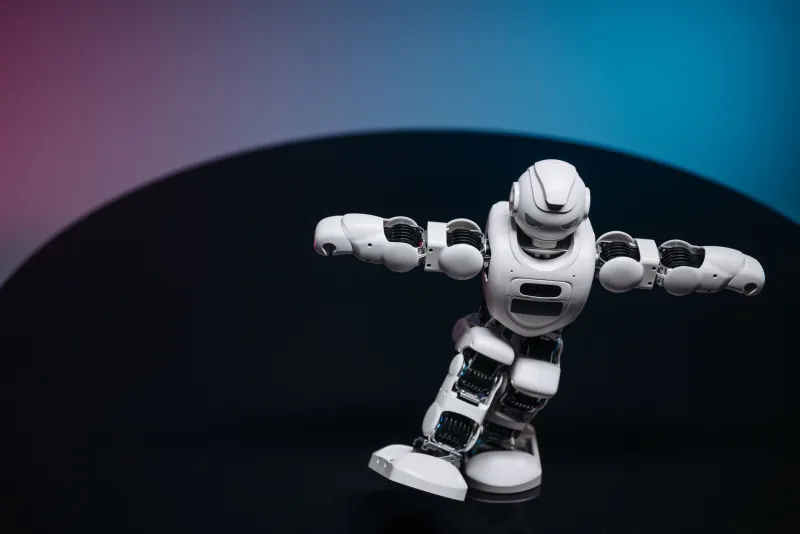
Broken Signal, Beautiful Chaos: Why Robot Esports Players Don't Want Lag Fixed
Every serious esports organization on the planet spends serious money chasing the same dream: zero latency. Perfect server sync. A network environment so clean and stable that every match is decided purely by human skill, with no technical noise muddying the result.
The IRONCLASH competitive community would like you to keep that dream far away from their game.
"If they ever fully fix the desync, I'm retiring," says Tyler 'Gridlock' Massey, a top-ranked IRONCLASH player based out of Charlotte, North Carolina. He's not joking. His entire competitive identity — the read patterns, the timing exploits, the mechanical gambits that have earned him three regional titles in two years — depends on a network environment that most developers would classify as a bug report.
This is the strange, thriving reality of robot-focused competitive gaming in 2024: the broken stuff isn't just tolerated. It's load-bearing.
The Lag Isn't What You Think It Is
To understand why, you have to understand what lag actually does in a game built around mechanical combatants.
In human-character fighting games or shooters, latency creates a clean problem: your input arrives late, and you die for something you did correctly. The skill expression gets corrupted. Competitive integrity suffers. Everyone agrees this is bad.
Robot-focused games behave differently. When a mechanical character's animation state desyncs between server and client — when the robot your opponent sees is slightly out of phase with the robot you're controlling — it creates a second layer of information asymmetry that skilled players can actively exploit.
In IRONCLASH, this manifests as what the community calls "ghost frames" — brief windows where a robot's hitbox and its visible model occupy different positions. To a casual player, this looks like a glitch. To Gridlock, it's a positional tool. "I know exactly how my main's desync window behaves at 60 to 80 millisecond ping," he explains. "I can bait attacks into a hitbox that my opponent thinks is clear. It's not cheating. It's reading the system."
The Arms Race Nobody Talks About
Here's where it gets genuinely interesting from a technical standpoint. The publishers of robot esports titles are caught in a weird bind.
On one side, competitive integrity advocates — tournament organizers, sponsors, and new-player advocates — push for tighter server infrastructure, better rollback netcode, and reduced variance. On the other side, a vocal and highly skilled player base argues that reducing variance doesn't clean up the competitive environment. It flattens it.
The argument goes like this: human-centric esports games have spent years optimizing toward pure skill expression. The result is a competitive ceiling dominated by reaction time, mechanical precision, and rote pattern memorization. Robot games, with their heavier physics simulation loads and more complex hitbox geometries, introduce a layer of systemic chaos that rewards a different cognitive skill set — one built around probability reading, system exploitation, and adaptive decision-making under uncertainty.
Take away the chaos and you don't get a better competitive game. You get a worse clone of something that already exists.
"Every time the devs patch the server tick rate up, the top 50 players immediately run experiments to find the new variance patterns," says competitive analyst and IRONCLASH commentator Deanna Okafor. "The chaos doesn't go away. It just moves. The players who understand that are always three patches ahead."
The Publisher Tightrope
Developers building robot esports titles are navigating this tension in real time, and their approaches vary wildly.
Some studios have quietly adopted what insiders call "controlled variance" — deliberately leaving certain latency behaviors in place while stabilizing the underlying infrastructure. The chaos is curated rather than accidental. The players who know, know. The sponsors who don't, don't ask.
Others are leaning into it explicitly. One mid-sized studio currently in late-stage development on a competitive mech title — who asked not to be named ahead of their announcement — confirmed they've built an internal tool that maps competitive player behavior against server desync events. The goal isn't to eliminate the exploitable windows. It's to ensure they're consistent enough to be learnable.
"We're not making a broken game," their lead network engineer told us. "We're making a game where the ceiling is higher because the system has depth that rewards study. Lag is just physics with a PR problem."
The Community Holds the Line
Meanwhile, the player communities themselves are doing something unusual: actively resisting patch notes that would conventionally be seen as improvements.
When IRONCLASH pushed a server-side update last spring that tightened hitbox synchronization across its roster of mechanical fighters, the competitive subreddit didn't celebrate. It revolted. Threads dissecting the "loss" of specific desync behaviors hit the front page. Tournament organizers announced they'd be hosting events on the previous patch version. The developers walked back part of the update within two weeks.
This kind of organized resistance to stability patches is nearly unheard of in other esports. It reflects something specific to robot game communities: a deep investment in the system as an adversarial entity in its own right. The network isn't just the medium the game runs on. It's a participant.
"In fighting games, you fight the other player," Gridlock puts it. "In IRONCLASH, you fight the other player, their robot, and the server. That's three opponents. Why would I want to make it easier?"
Why This Matters Beyond the Niche
The implications here stretch beyond robot esports. What the IRONCLASH community is demonstrating — somewhat chaotically, very loudly — is that competitive depth and technical perfection aren't the same thing. A perfectly synced, zero-variance environment can be a competitive ceiling, not a competitive floor.
The most volatile robot esports scenes are producing some of the most sophisticated strategic thinking in competitive gaming right now. Players who can read probability distributions in real time, adapt to shifting system behaviors mid-match, and weaponize technical imperfection are developing a skill set that clean-room competitive environments simply can't cultivate.
Lag built these players. And they're not giving it up without a fight.