Off the Shelf Won't Cut It: The Underground Hardware War Powering Robot Game Dominance
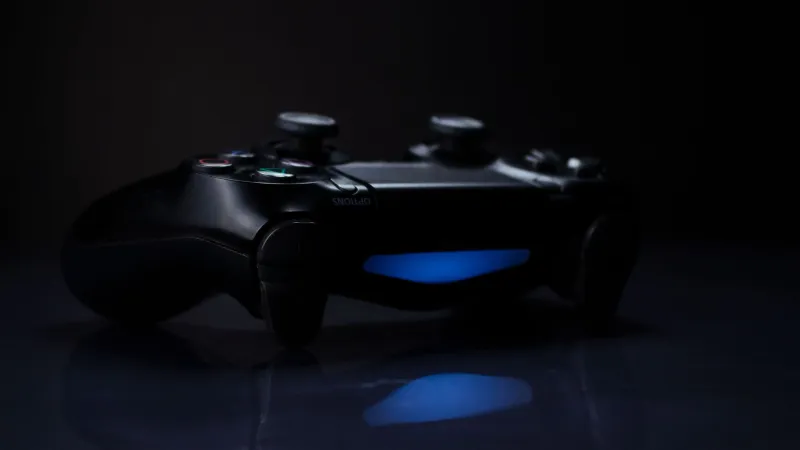
Walk into any serious robot game tournament — the kind held in rented warehouse space with zip-tied LED strips and folding tables that wobble when you breathe — and the first thing you notice isn't the screens. It's the controllers. Or rather, the things that barely qualify as controllers anymore.
There are custom throttle assemblies bolted to plywood bases. Arcade sticks with reprogrammed gate patterns. Foot pedals rigged to handle boost management that a thumb was never meant to do. And sitting across from all of it, some newcomer clutching a stock Xbox controller, about to get absolutely cooked.
The question isn't why these rigs exist. The question is why nobody with a major manufacturing budget has bothered to build them properly.
Why PlayStation and Xbox Aren't Coming to Save You
Here's the uncomfortable math: the robot combat sim genre, the mech-piloting niche, the competitive bot-builder circuit — these communities are passionate but small. We're talking tens of thousands of dedicated players, not tens of millions. Sony isn't designing a peripheral for 40,000 people when it could be designing one for 40 million Madden players.
That's not cynicism. That's a product roadmap.
"The big guys build for the median," says Marcus Trell, a competitive Steel Dominion player based out of Columbus, Ohio, who's been running a custom twin-stick setup for three years. "The median gamer plays shooters and sports games. We're not the median. We're the weird cousins nobody invites to Thanksgiving, and we had to start cooking our own food."
The problem runs deeper than market size, though. Robot games — particularly the simulation-adjacent ones where you're managing torque, weapon rotation, heat management, and movement vectors simultaneously — demand input granularity that a standard analog stick simply wasn't designed to deliver. A thumbstick gives you a circle. Mech pilots need a sphere. The difference sounds abstract until you're trying to independently manage your chassis rotation and arm elevation mid-fight and your thumb is doing the work of three fingers.
The Indie Builders Filling the Gap
Into that vacuum stepped a loose network of garage engineers, modders, and small-batch hardware studios who saw a problem and smelled a business.
Outfit like Ironframe Controls out of Austin has been producing limited-run dual-throttle arcade panels specifically tuned for mech sims since 2021. Their flagship unit — the Ironframe T2, priced at $340 — uses Hall effect sensors instead of traditional potentiometers, which eliminates the drift that kills precision inputs during long tournament sessions. They sell maybe 800 units a year. They're booked six months out.
On the more extreme end, you've got individual modders on Discord building one-off custom rigs for specific players at specific games. Think: a guy in his garage in Tucson who spent four months engineering a controller that maps weapon-arm control to a modified flight stick because the player he was building for has a repetitive strain injury in his right thumb. It works. The player placed second at a regional last spring.
"We're not competing with Razer," says one builder who goes by the handle Voltcrank and operates out of the Pacific Northwest. "Razer doesn't even know we exist. We're building for people who need something that doesn't exist yet. That's a different job entirely."
What the Rigs Actually Do
So what kind of edge does custom hardware actually deliver? It depends on the game, but the advantages cluster around a few categories.
Input latency. Off-the-shelf controllers are built with acceptable latency tolerances. Custom wired setups, particularly those using direct USB HID mapping without firmware overhead, can shave meaningful milliseconds off the input chain. In a game where a quarter-second reaction window is the difference between a block and a hit, that's not nothing.
Ergonomic endurance. Tournament sets run long. A stock controller grip optimized for casual two-hour sessions starts to become a liability in a six-hour bracket. Custom rigs built to a player's hand geometry reduce fatigue in ways that directly affect late-tournament performance.
Functional mapping. This is the big one. Robot games often have more simultaneous inputs than a standard controller layout can cleanly accommodate. Foot pedals for boost. A second analog axis for independent turret control. A dedicated toggle for weapon mode switching that doesn't require pulling a finger off the movement stick. These aren't luxury features — for players at the top of the bracket, they're structural.
"I literally cannot go back to a standard controller for this game," says Priya Sandhu, a Mech Fracture competitor from the Chicago area. "It would be like asking someone who learned to drive in an automatic to suddenly race a manual. The inputs are just wrong for what the game is asking."
The Certification Problem Nobody Talks About
Here's where it gets thorny. Tournament organizers are increasingly wrestling with what hardware to allow in sanctioned play. A custom rig that delivers measurably better input performance starts to look less like a skill expression and more like a pay-to-win equipment gap.
Most niche robot game circuits have landed on a loose honor system: if it's a modified version of a commercially available base unit, it's probably fine. If it's something built from scratch in a garage, it goes to the TO's discretion. That's a wildly inconsistent standard, and everyone knows it.
The irony is that standardizing around better hardware — the kind these indie builders are already making — would level the playing field. But that requires mainstream manufacturers to care enough to build it, and we're back to the market-size problem.
Until then, the underground hardware war keeps running. The rigs keep getting weirder and better. And the guy with the stock Xbox controller keeps getting cooked.
Somebody should probably tell him.