Too Good to Be Human: When Anti-Cheat Declared War on Its Own Players
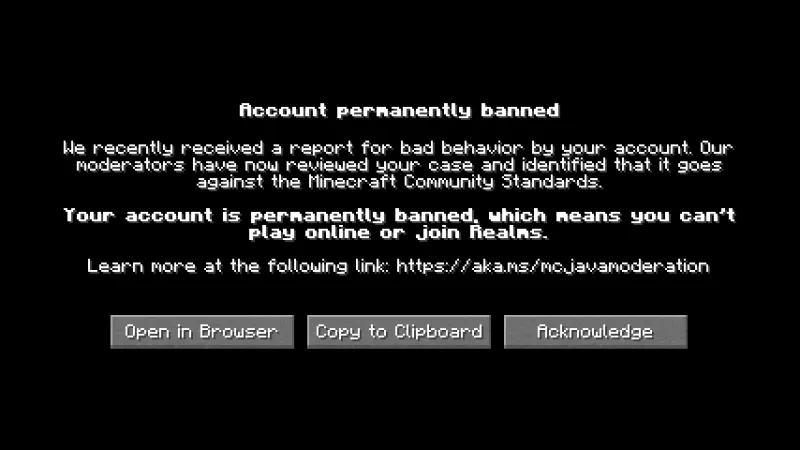
Photo: Mojang Studios, Public domain, via Wikimedia Commons
The ban notice arrived on a Tuesday afternoon. Marcus Webb, a 28-year-old network technician from Columbus, Ohio, had just finished a six-hour ranked session in Sentinel Protocol — a robot-heavy tactical shooter with one of the most aggressive anti-cheat systems in the genre. His win rate against the game's AI-controlled enemy units had been exceptional. Statistically exceptional. Too exceptional, apparently, for the algorithm to believe he was a person.
His account was suspended for "anomalous performance indicators consistent with third-party assistance."
He had not cheated. He had just gotten very, very good at reading robots.
The System That Suspects Everyone
Modern anti-cheat software operates on behavioral modeling. It doesn't just look for known cheat signatures — it builds a statistical profile of what "normal" human performance looks like and flags anything that deviates too far from that baseline. The problem? Those baselines were largely built using data from human-versus-human play.
Robot opponents in competitive games behave differently from human players. Their attack patterns, while complex, are ultimately deterministic — they follow logic trees, not instinct. A skilled player who has studied those logic trees extensively can achieve accuracy and reaction metrics that look, to an algorithm trained on human-versus-human data, completely impossible.
"The AI in these games has exploitable rhythms," explains TorqueGhost, a competitive Sentinel Protocol player with over 3,000 hours logged. "Once you internalize them, you start hitting headshots on robots at rates that would be superhuman against a real person. But it's not superhuman. It's pattern recognition. The anti-cheat doesn't know the difference."
TorqueGhost was banned twice in a single year. Both bans were eventually reversed after manual review. The process took six weeks the first time, nine weeks the second.
The False Positive Epidemic
This isn't a fringe issue. In the past 18 months, community-run tracking threads across Reddit and Discord have documented over 800 reported cases of players being flagged — and in many cases, suspended — specifically in game modes that feature robot or AI-controlled opponents. The pattern is consistent: players who specialize in PvE content, or who grind ranked modes with heavy AI integration, get hit disproportionately.
Game publishers rarely acknowledge false positives publicly. The standard response is a form email directing players to an appeals process that can take months and offers no transparency about the specific flags that triggered the ban.
"I submitted a 40-page document," says Priya Nair, a competitive player from the Chicago area who was suspended from Ferrous Divide after posting a viral clip of a perfect-score run against the game's hardest robot gauntlet. "I included frame data, input logs, hardware specs, everything. Their response was a template. Three sentences. No explanation of what specifically I triggered."
Nair's appeal was successful, but only after her clip drew enough community attention that it became a PR problem for the publisher. She estimates the process cost her roughly $300 in lost battle pass progression and tournament entry fees.
The Technical Failure at the Core
The root of the problem is architectural. Anti-cheat systems that weren't designed with AI-opponent gameplay in mind are being applied uniformly across all game modes — including modes where the performance ceiling is fundamentally different.
A human player going 40-and-2 against human opponents in a tactical shooter is an extreme statistical outlier. A human player going 40-and-2 against robot opponents in the same game might be Tuesday afternoon for someone who's memorized every enemy behavior tree.
"These systems need separate baselines for PvE and PvP contexts, full stop," says a software engineer who works in game security and spoke on background. "Applying the same anomaly thresholds to both is like using a speed camera calibrated for a school zone on a highway. You're going to catch a lot of innocent people."
Some studios are aware of the gap. A small number have begun segmenting their behavioral models by game mode. But the process is slow, resource-intensive, and not a priority for publishers who view false positives as a minor PR nuisance rather than a systemic failure.
Fighting the Machine
The players pushing back aren't going quietly. Several have organized into informal advocacy groups, sharing appeals templates, documenting response times, and pressuring publishers through coordinated social media campaigns. A few have pursued formal disputes through platform services like Steam and the PlayStation Network with mixed results.
What's striking is the specific frustration these players express: they were penalized not for cheating, but for understanding the robots better than the system expected them to.
"The anti-cheat thinks I'm a bot because I beat the bots too efficiently," TorqueGhost says, with a laugh that's only half amused. "There's something deeply stupid about that. I spent years learning how these machines think, and the reward was getting treated like one."
For now, the safest advice for players who specialize in AI-heavy content is grimly practical: deliberately underperform occasionally, vary your accuracy, take some avoidable hits. Play worse than you can, so the algorithm believes you're human.
Which is, when you say it out loud, a genuinely absurd thing to ask of someone who just wants to be good at a video game.