When the Controller Hits Back: The Injury Lawsuits Putting Haptic Gaming Hardware on Trial
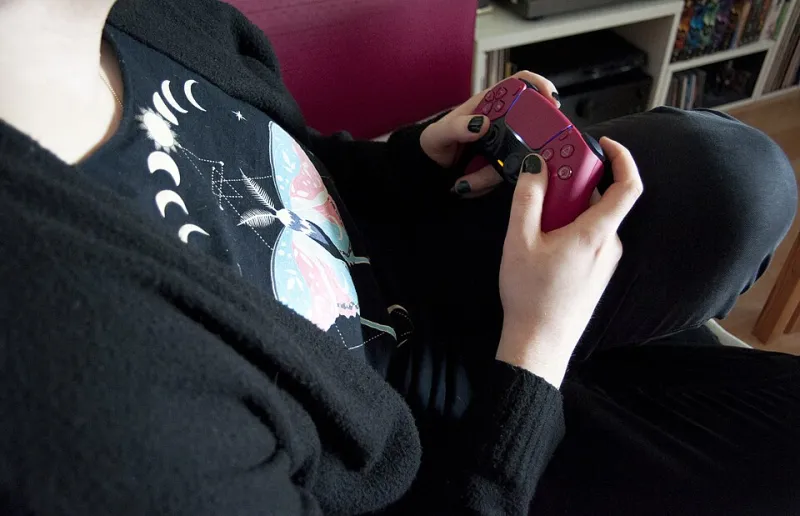
Photo: InclusiveGameLab, CC BY-SA 4.0, via Wikimedia Commons
The pitch was straightforward: feel every hit. That's been the marketing language around advanced haptic gaming hardware for the better part of three years now. Feel the mech's footstep. Feel the impact when your drone gets clipped. Feel the game.
Ryan Castellano felt it. For about six weeks during an intensive competitive training block in late 2023, the 24-year-old from San Antonio ran daily four-to-six-hour sessions with a high-end haptic feedback system designed specifically for robot combat titles. He was grinding for a regional tournament. He was also, without knowing it, accumulating damage in the tendons of his right forearm that would eventually require surgery.
"The device was doing exactly what it was supposed to do," Castellano says. "That's what makes it hard to explain to people. It wasn't malfunctioning. It was working perfectly."
His lawsuit against the manufacturer — filed in federal district court in Texas in early 2024 — is one of at least seven similar cases currently active in the US, all involving haptic gaming peripherals and claims ranging from repetitive stress injuries to nerve compression. The hardware industry is watching closely. So are the lawyers.
How Haptic Feedback Became This Intense
To understand how we got here, it helps to understand how fast haptic technology escalated.
First-generation gaming rumble was simple: a motor, a weight, a vibration. Uniform. Blunt. The kind of feedback that tells you "something happened" without specifying what. Modern haptic systems in the high-end gaming peripheral market are a different category of device entirely. They use multiple independent actuators, frequency modulation, and in some cases pneumatic components to simulate textures, impacts, and directional forces with genuine physical specificity.
For robot combat games specifically — titles where the entire fantasy is piloting or fighting massive mechanical systems — this technology found a natural home. The games generate enormous amounts of haptic data: footfalls, weapon impacts, system failures, collision events. A premium haptic controller or vest can be receiving and translating dozens of distinct physical signals per minute during active gameplay.
During a competitive session, that number climbs significantly.
"We're talking about sustained, repetitive micro-contractions in the muscles and tendons of the hands and forearms," says Dr. Alicia Tran, a sports medicine physician in Chicago who has treated three patients she links to extended haptic gaming sessions. "The individual events are small. The cumulative load over hours of daily play is not small at all. We see analogous patterns in assembly line workers and certain musicians."
What the Lawsuits Actually Claim
The cases in play vary in their specifics, but share a common structural argument: manufacturers knew or should have known that extended high-intensity use of their haptic systems posed injury risks, and they failed to adequately warn consumers.
Castellano's suit alleges that the device he used — a haptic glove peripheral marketed specifically for competitive mech gaming — shipped with usage guidelines recommending breaks every 90 minutes, but that the same manufacturer's competitive community content, including sponsored streamer sessions and tournament promotional material, routinely depicted and implicitly endorsed four-to-six-hour continuous use.
"There's a gap between what the manual says and what the brand projects," says Austin-based attorney Marco Reyes, who represents Castellano and two other plaintiffs in separate cases. "You can't put a 90-minute guideline in fine print and then sponsor a 12-hour marathon stream. That's a contradictory message, and when someone gets hurt following the implicit message, you have a problem."
Manufacturers have largely declined to comment on active litigation, which is standard. In one case, a company's motion to dismiss argued that the plaintiff's injury was attributable to "pre-existing susceptibility" and "self-directed overuse" rather than any product defect. That motion was denied at the preliminary stage.
The Medical Evidence Getting Complicated
One challenge for plaintiffs is establishing causation with enough specificity to satisfy a court. Repetitive stress injuries are common across dozens of activities, and isolating haptic gaming as the proximate cause requires medical documentation that most injured players didn't think to collect in real time.
Dr. Tran notes that the injury profiles she's seen do have distinguishing characteristics. "The distribution of stress in the forearm and hand is slightly different from standard gaming injuries because haptic feedback is essentially adding a load that passive controller use doesn't create. You're not just gripping — you're absorbing repeated micro-impacts. The pattern is recognizable once you know to look for it."
For plaintiffs who sought medical attention early and connected it to their gaming setup, documentation is relatively strong. For those who pushed through discomfort — as competitive players routinely do — the evidentiary picture is messier.
What Manufacturers Are Doing Right Now
Behind the scenes, the hardware industry is moving. Three major peripheral manufacturers have quietly updated their haptic product documentation in the past eight months, adding more prominent usage warnings and in two cases reducing the default intensity settings on their highest-output devices.
At least one company has reportedly convened an internal safety review specifically focused on competitive use scenarios — the high-intensity, extended-duration sessions that represent a small fraction of their user base but a disproportionate share of potential liability exposure.
Whether any of this constitutes genuine reckoning or defensive positioning ahead of litigation outcomes is a fair question. Reyes, the attorney, is skeptical. "Updating a manual after someone files a lawsuit isn't a safety culture. It's damage control."
For competitive players still grinding daily sessions, the practical guidance is frustratingly vague. The injuries are real. The risk factors are identifiable. But the specific thresholds — how long is too long, what intensity is too intense — haven't been formally studied in peer-reviewed research. The hardware moved faster than the science.
"I'd still be using it," Castellano says of his haptic setup, before the surgery. "That's the thing. I loved how it felt. I just didn't know what it was costing me."
The courts will spend the next year or two deciding what that cost is worth. The industry will spend the same period trying to make sure it's not their bill.