Almost Human, Never Quite: Why Game Devs Are Obsessed With Getting Robots Perfectly Wrong

There's a specific kind of discomfort that lives between "clearly a machine" and "basically a person." Game designers have a name for it. Players have a feeling for it. And right now, a small but loud corner of the indie dev scene is treating that discomfort like buried treasure.
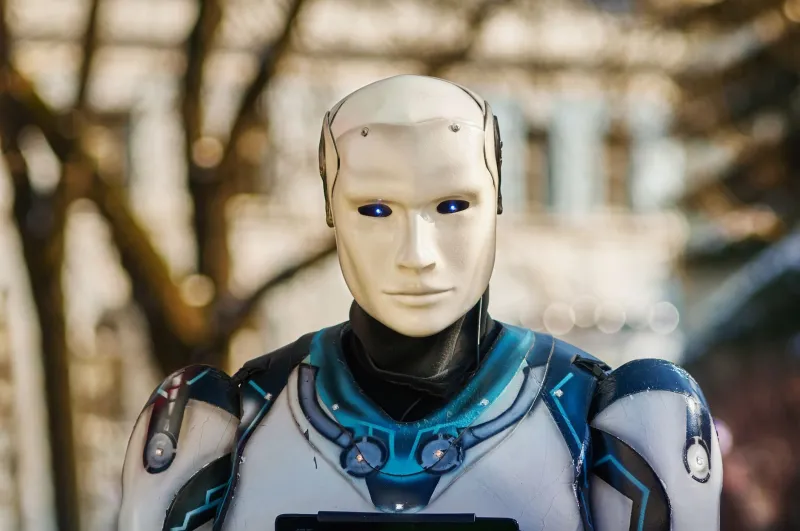
We're talking about the uncanny valley — that psychological dip where a robot or CG character looks just human enough to unsettle you, but not human enough to feel real. For decades, the conventional wisdom was simple: avoid it at all costs. Build your robot characters either sleek and mechanical or warmly lifelike. Don't get caught in the middle.
Some developers decided that advice was wrong. Deliberately, methodically wrong.
The Sweet Spot Nobody Wanted to Find
The theory goes something like this: a player who feels slightly unsettled is a player who stays alert. Alert players are engaged players. Engaged players keep playing.
It sounds almost too cynical to be real, but the data backs it up. Studios experimenting with what some are calling "calibrated wrongness" — robot animations tuned to be just slightly off — are reporting measurably longer session times and stronger emotional recall in post-play surveys.
"We spent three months getting our main robot character to blink wrong," says one indie developer who's been building a narrative sci-fi game out of a two-person studio in Austin, Texas. "Not horror-movie wrong. Just... a quarter-second too slow. Half a beat out of sync with the dialogue. Players couldn't tell you why they felt weird around her, but they absolutely felt it."
That's the design philosophy in a nutshell. Not jump scares. Not grotesque visuals. Just persistent, low-grade wrongness that the brain can't quite categorize and can't quite ignore.
The Animation Math Behind the Madness
Pulling this off is harder than it sounds. The uncanny valley isn't a fixed location — it shifts depending on context, player expectations, and even the genre they think they're playing. A robot that reads as "eerie" in a quiet exploration game might read as "broken" in a fast-paced shooter, which kills immersion instead of building it.
Developers working in this space talk about it like tuning an instrument. You're not going for silence and you're not going for noise. You're going for a specific, sustained tension.
The variables they're tweaking include micro-expressions — subtle facial movements that don't quite match the emotional context. Eye tracking that's accurate 90% of the time but drifts inexplicably on the other 10%. Walking gaits with a cadence that's almost rhythmically correct but introduces a tiny asymmetry that the player's brain registers as "wrong" without being able to articulate why.
One developer described running their robot character's walk cycle through player focus groups and adjusting stride asymmetry in increments of single percentage points until they found the version that made testers describe the character as "interesting" rather than "broken" or "fine."
"Fine is death," she said. "Fine means forgettable. We needed interesting. Interesting keeps you in the room."
Why Smooth Is Boring Now
Here's the cultural context that makes this moment make sense. Players in 2024 are visually sophisticated in ways that would've seemed absurd fifteen years ago. Photorealistic graphics are no longer a flex — they're a baseline expectation on mid-tier hardware. Motion capture is so common that a perfectly smooth, perfectly natural robot animation barely registers as impressive.
In that environment, perfect has become invisible. And invisible doesn't hold attention.
The studios leaning into calibrated wrongness are essentially exploiting a gap in player psychology: we are biologically wired to notice things that are almost-but-not-quite right. It's the same instinct that makes you stare at a painting that's hung slightly crooked, or re-read a sentence with a word out of order. The brain wants to resolve the tension. When the game refuses to resolve it, you keep playing.
There's also a storytelling angle here that's worth taking seriously. A robot character who moves with subtle imperfection carries implicit narrative weight. Is she malfunctioning? Is she evolving? Is there something she's hiding? The animation itself becomes a form of lore delivery, and players start theorizing before the story has even given them anything to theorize about.
The Risk Nobody Talks About
All of this comes with a real downside that developers in this space are careful about. The margin between "compellingly off" and "just broken" is razor thin, and it changes across different player demographics.
Younger players who've grown up on polished AAA titles sometimes read intentional imperfection as a bug. Older players with more tolerance for rough edges can sometimes lean into it harder than intended and end up more disturbed than engaged. Accessibility is a real concern too — some players with sensory processing differences report that sustained low-grade wrongness in character animation is genuinely distressing rather than exciting.
The developers doing this well are building in options. Sliders for animation smoothing. Toggle settings that let players dial the wrongness up or down. One studio is experimenting with adaptive systems that read player behavior in real time and adjust the intensity of the uncanny effect based on how the player is responding.
It's a wild amount of engineering to make something feel slightly wrong in exactly the right way.
The Bigger Conversation
What's happening in this corner of game development is a microcosm of a larger argument the industry keeps having: what are games actually for? If the goal is pure comfort and escapism, then smooth, warm, perfectly human robot characters make sense. Give players something easy to connect with and get out of their way.
But if games are supposed to challenge players — emotionally, perceptually, psychologically — then the uncanny valley stops being a design hazard and starts being a tool. A precise, intentional, potentially powerful tool.
The developers pushing this approach aren't trying to traumatize anyone. They're trying to find the exact frequency of discomfort that keeps a player present, curious, and emotionally invested. That's not so different from what every great horror movie, thriller novel, or tense sports broadcast is trying to do.
They're just doing it one misaligned blink at a time.
And based on the retention numbers coming out of early access builds and closed betas, it turns out players kind of love being messed with — as long as the game is smart enough to do it right.