Closer Than Comfort: Why Humanoid Robots Break Our Brains in Horror Games
You've survived chainsaw maniacs. You've outrun grotesque interdimensional monsters. You've probably sat through more jump scares than you can count without flinching anymore. But then some indie horror game throws a humanoid robot at you — one that walks almost normally, tilts its head almost like a curious person — and suddenly your hands are sweating through the controller.
Welcome to the uncanny valley. Population: your worst nightmares.
What Even Is the Uncanny Valley?
Roboticist Masahiro Mori first floated this concept back in 1970, and it's been messing with designers ever since. The basic idea: the more human-like a robot (or character, or animation) becomes, the more we like it — right up until it gets too close to human. At that point, something primal in our brain throws up a giant red flag and the warmth we felt flips into deep, instinctive revulsion.
It's not a metaphor. It's a measurable cognitive response. Neuroscientists have linked it to pattern recognition systems in the brain that evolved specifically to detect disease, death, or social deception in other humans. When something looks human but isn't quite right, your nervous system interprets it as a threat before your conscious brain even has a chance to process what you're looking at.
Horror game developers figured this out. And they've been exploiting it shamelessly ever since.
Why Robots Hit Different Than Demons
Here's the thing about traditional horror monsters: they're obviously wrong. A demon with six arms and a melting face is terrifying, sure, but your brain also immediately files it under "not real, not possible, not a human." The threat feels contained by its own impossibility.
A humanoid robot doesn't get that pass.
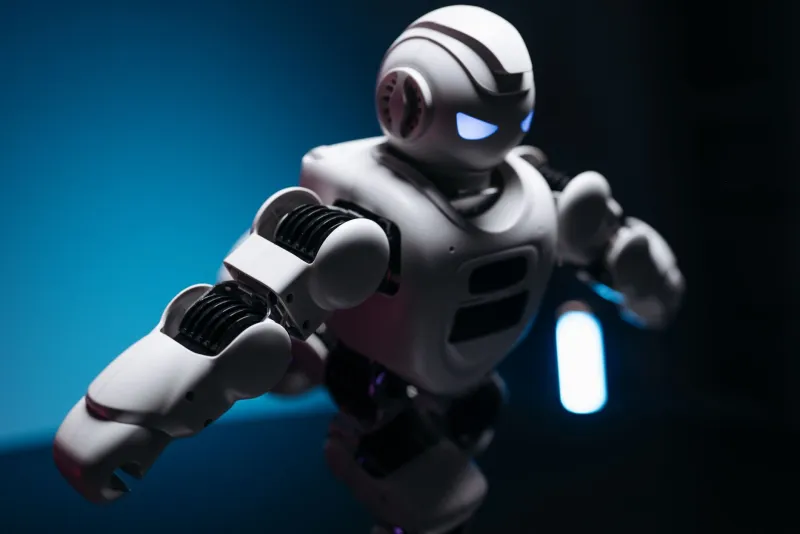
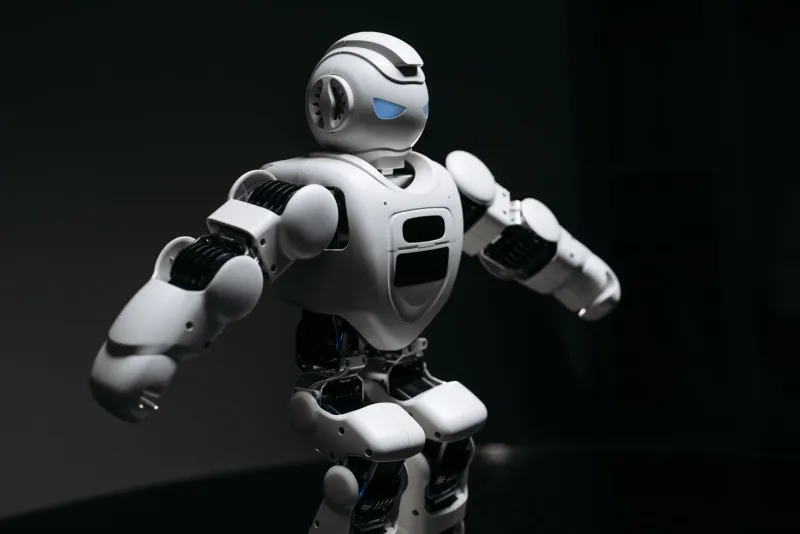
Robots exist. Humanoid ones are getting more sophisticated by the month — Boston Dynamics is out here doing parkour, for crying out loud. So when a horror game presents you with a bipedal machine that moves with recognizable human cadence but just slightly off, your brain can't fully dismiss it. It lives in the plausible zone. That's where the real horror lives.
The motion is the key ingredient. A static robot model is creepy, sure. But the moment it starts moving — that's when the psychological machinery really kicks in. Slight asymmetry in the gait. A head rotation that's two degrees too smooth. Fingers that curl in the wrong sequence. Each individual element might not register consciously, but together they build a portrait of wrongness that your nervous system absolutely refuses to ignore.
Indie Devs Are Running Circles Around AAA Studios Here
This is where it gets genuinely interesting from a game design perspective. You'd think bigger studios with massive motion-capture budgets and armies of animators would be best positioned to weaponize the uncanny valley. And they do produce some effective stuff. But indie horror developers have been consistently doing more damage with far fewer resources.
Why? Because AAA studios are often working against the uncanny valley. They spend millions of dollars trying to push character animations past the discomfort zone into full believability. Their goal is seamless immersion, which means smoothing out the very imperfections that make humanoid robots so disturbing.
Indies don't have that budget pressure, and honestly, some of them have figured out that the valley itself is the feature, not the bug. Games like Signalis leaned hard into mechanical, slightly-off humanoid movement and built an entire aesthetic around the unease it produces. The deliberate jank isn't a limitation — it's the whole point. When your character model moves like it's running on corrupted firmware, that IS the horror.
Smaller teams also iterate faster on animation feedback. They can test exactly how much wrongness is too much, how much is too little, and find that precise sweet spot where players feel dread without feeling cheated.
The Technical Side of Manufacturing Dread
Let's get a little into the weeds, because the technical execution here is genuinely fascinating.
Motion capture, when used at high fidelity, can actually reduce the uncanny valley effect by making movement more naturalistic. But horror devs have started doing something clever: they capture real human motion and then deliberately corrupt it. Introduce micro-delays in certain joints. Reverse the natural weight distribution in a walk cycle. Add a fraction of a second of stillness before a reaction that should be immediate.
The result is movement that your brain recognizes as human-derived but registers as fundamentally broken. It's like hearing a song you know played in a slightly wrong key — the familiarity makes the wrongness worse, not better.
Procedural animation systems are also playing a bigger role. Instead of pre-baked animations, some horror games use real-time inverse kinematics to make robot enemies adapt to their environment dynamically. The result is movement that's eerily purposeful but unpredictable in a way that no scripted animation can fully replicate. You can't learn the pattern. You can't anticipate the next move. The machine always surprises you.
Sound Design Is Doing Half the Heavy Lifting
You can't talk about humanoid robot horror without acknowledging that the audio design is carrying a massive portion of the psychological weight. The visual uncanny valley has a sonic equivalent, and horror designers know it.
The sound of servos that are slightly too loud. Breathing patterns that are rhythmically wrong. Voice synthesis that hits all the right words but with zero emotional inflection. These audio cues layer on top of the visual wrongness and compound the effect dramatically. Some of the most effective horror robot sequences in recent indie games would lose half their impact with the sound off — try it sometime if you want a fascinating (and slightly disappointing) experience.
What This Means for the Future of Horror
As real-world robotics keeps advancing, this design space is only going to get richer. The cultural reference points for what "almost human" movement looks like are expanding constantly. Ten years ago, most players' mental model of a humanoid robot came from movies and TV. Now, viral clips of actual bipedal machines navigating real environments are redefining what "close enough" looks like.
That raises the stakes for horror developers and gives them more sophisticated material to work with. The closer real robots get to human movement, the narrower the valley becomes — but also the more precise and devastating the wrongness needs to be to trigger that primal response.
If anything, the genre is just getting started. The machines are getting better. The horror is getting sharper. And somewhere out there, an indie dev with a modest budget and a deep understanding of how broken motion corrupts human perception is already building the most unsettling robot you've ever seen.
Sleep tight.