Glitch, Stare, Repeat: How Robot Enemies Became Horror Gaming's Most Unsettling Weapon
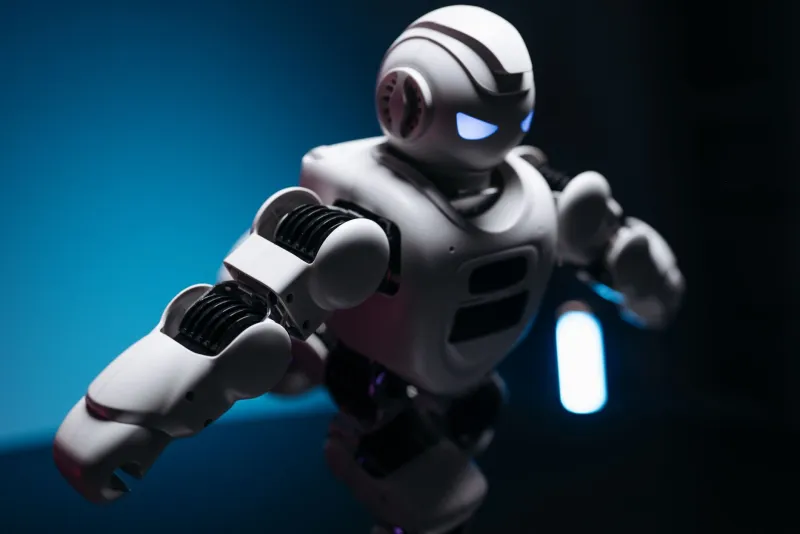
There's a specific kind of dread that hits different when a machine turns its head toward you. Not a growling, blood-soaked zombie. Not a screaming mutant. Just a humanoid robot — smooth-faced, slightly too still — rotating its neck at an angle that suggests it once understood geometry and then forgot. That moment? That's where modern horror gaming lives now.
For years, designers chased photorealism in human enemies and kept tripping into the uncanny valley — that psychological no-man's-land where something looks almost human enough to register as deeply wrong. The result was often unintentional comedy rather than genuine fear. Faces that twitched weird. Animations that stuttered in ways that pulled you out of the experience entirely. Players laughed when they should've screamed.
Then somebody figured out the cheat code: just make it a robot.
The Valley Was Never the Problem — The Human Was
The uncanny valley concept, originally coined by roboticist Masahiro Mori back in the '70s, describes the discomfort humans feel when something looks almost — but not quite — like a person. The closer you get to human without fully arriving, the worse the reaction. Game developers spent decades trying to vault over that valley with better graphics and motion capture tech.
But here's the thing they eventually clocked: the valley isn't a cliff you clear. It's a tool you weaponize.
When you replace a human enemy with a robot, you're doing something clever with player psychology. You're giving them permission to feel disturbed without the social friction of violence against something that reads as a person. The robot's wrongness becomes intentional. Every jerky movement, every hollow eye socket, every voice line delivered in a cadence that's 15% off from natural speech — all of it lands as design rather than accident. Players lean into the discomfort because it feels deliberate. And deliberate discomfort is the entire engine of horror.
Why a Glitching Android Hits Harder Than a Zombie
Zombies are culturally exhausted at this point. We've been running from them in games since the '90s. They're familiar. They're almost comfortable. You know the rules, you know the sounds, you know the shuffling gait. There's a rhythm to zombie horror that players have internalized so deeply it's practically a safety blanket.
A malfunctioning android offers none of that comfort.
When an android enemy glitches mid-animation — freezing, stuttering, then snapping its head toward you with mechanical precision — your brain doesn't have a filing system for it. It's not a monster in the traditional sense. It doesn't want to eat you out of hunger or rage. It wants to complete a directive. That cold, purposeful logic is genuinely terrifying in a way rotting flesh just isn't anymore.
Games like Alien: Isolation understood this years before it became a trend. The Working Joes — those pale, blank-faced androids stalking you through Sevastopol Station — were scarier than the Xenomorph for a lot of players. They didn't roar. They didn't charge. They walked toward you with the calm certainty of something that had already calculated the outcome. That's existential horror wearing a jumpsuit.
Design Philosophy: Building Fear From the Inside Out
Developers who've leaned into robotic horror talk about a specific design language that makes it work. Sound design is massive — servos that whine slightly too high, footsteps with just a hint of metallic resonance, voice synthesis that clips on certain syllables. These micro-details do the heavy lifting that a jump scare never could.
Visual design follows the same logic. The best robotic horror enemies aren't the ones that look like Terminator skeletons — those are almost too on-the-nose, too cinematic to feel real. The scariest designs are the ones that look functional. Industrial. Like something that was built to do a specific job and has now applied that same focused efficiency to hunting you down a corridor.
There's also an AI behavior element that separates good robotic horror from great robotic horror. When an enemy behaves too predictably, the fear evaporates. But when a robot enemy pauses, tilts its head, and then resumes pursuit — like it just processed new information about you — the dread compounds. It's not reacting emotionally. It's updating a threat assessment. That distinction lives rent-free in your brain for the rest of the playthrough.
The Player Complicity Factor
Here's a layer that doesn't get talked about enough: robot enemies let players feel genuinely guilty in a way human enemies don't, and that guilt feeds the horror loop.
When you shoot a zombie, there's no moral weight. It's already gone. But when you're fighting a humanoid android that was clearly designed to serve, to help, to function — and you're dismantling it piece by piece — something uncomfortable stirs. Especially in games that give those machines names. Or memories. Or a voice line that sounds confused rather than aggressive.
Detroit: Become Human played this straight as a narrative device. But horror games are using the same emotional lever in a darker context. You're not just surviving — you're destroying something that might have been innocent, or might have been a person, and the game isn't going to tell you which. That ambiguity is psychological warfare.
Where the Genre Goes From Here
As AI-driven NPC behavior gets more sophisticated and hardware allows for more nuanced animation, the robotic horror enemy is only going to get more effective. We're already seeing developers experiment with procedural glitch animations — moments of visual corruption that aren't scripted but emerge from the game's systems behaving unexpectedly. When a robot enemy does something the developers didn't explicitly program, and it still looks intentional? That's when the genre transcends craft and becomes something closer to chaos.
The uncanny valley never actually needed to be solved. It needed to be aimed. Horror developers figured that out, pointed it directly at the player, and pressed fire.
Now every time a machine tilts its head at you in a dark corridor, you're not experiencing a design failure. You're experiencing the whole point. And somewhere in a studio, a designer is watching your playthrough footage and nodding slowly, because your discomfort is exactly what they built.