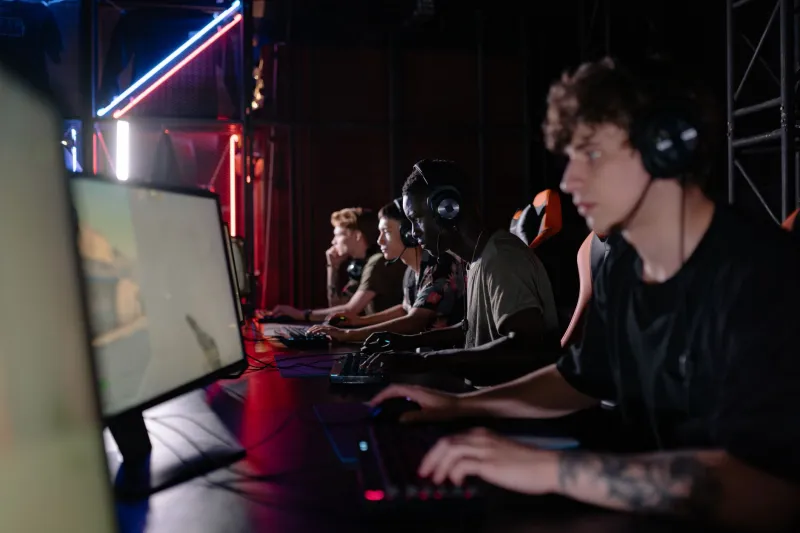
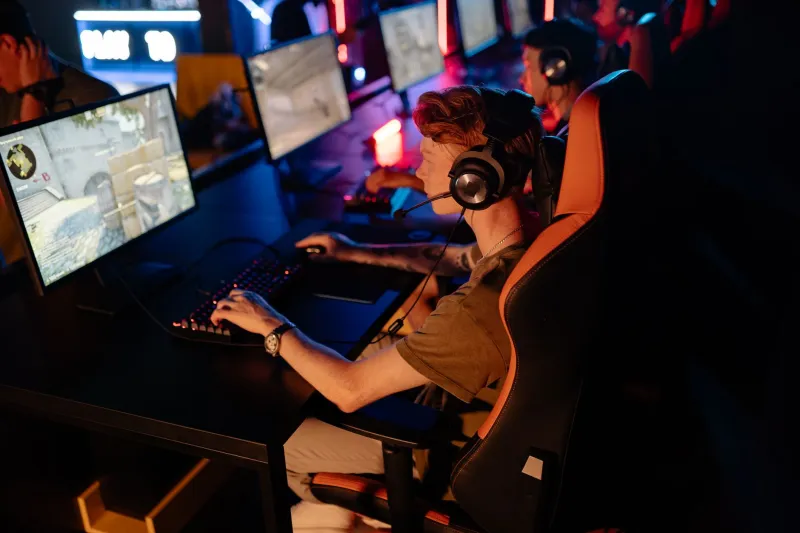
Hire the Hacker: Why Smart Game Studios Are Putting Cheaters on the Payroll to Fix Robot AI
There's a certain type of player who, upon encountering a sophisticated robot boss AI, immediately starts asking the wrong questions. Not "how do I beat it," but "where does it break." Not "what's the intended strategy," but "what did the developers not think of."
For most of gaming history, studios treated these people as problems. Ban them from forums. Patch their exploits. Issue terse statements about "unintended behavior" and move on. The adversarial relationship between developers and exploit hunters was so baked into industry culture that questioning it felt naive.
Some studios are now questioning it anyway. And the results are making a lot of people in game development rethink a philosophy that's been calcifying for thirty years.
The Old Model Was Always Broken
Let's be honest about what the traditional approach actually looked like in practice.
A studio spends eighteen months building a robot boss AI. QA runs it through a testing matrix. Internal testers find some issues; the issues get patched. The game ships. Within seventy-two hours of launch, a community of exploit hunters — people who do this for sport, for clout, for the pure intellectual satisfaction of finding cracks in systems — have identified three behaviors the AI exhibits that the developers never intended and cannot explain. Forums light up. Speedrunning communities adopt the exploits as canon. The studio issues a patch that breaks two other things.
This cycle is not hypothetical. It is the default mode of robot game AI development, repeated across dozens of titles every year.
The core problem is structural: QA teams, no matter how talented, are testing for what the developers expected players to do. Exploit hunters are specifically testing for what the developers didn't expect. These are fundamentally different activities, and studios were only doing one of them.
The Shift: When Banning Stopped Making Sense
The pivot didn't happen all at once. It happened as studios started doing the math.
A known exploit hunter — someone with a documented history of finding AI vulnerabilities, with a community following built around that skill — represents a specific, demonstrable capability. They have found real holes in real systems. Their track record is public. You can watch their work on YouTube and Twitch and evaluate it the same way you'd evaluate a portfolio.
Banning that person from your community means they'll find the holes anyway, post about it publicly, and you'll be patching reactively after launch when the damage is already done. Hiring them means the holes get found before anyone outside the studio sees them.
This is not a complicated calculation once you frame it that way. What took so long was the culture getting out of its own way.
"There was this deeply embedded idea that the cheaters were the enemy," said one senior developer at a mid-sized studio who asked not to be named. "Like, if you hired them, you were legitimizing what they did. You were rewarding bad behavior. It took watching a competitor get absolutely torched at launch by a day-one AI exploit — something that was in every review, that dominated the conversation for two weeks — before the conversation internally changed."
What These Roles Actually Look Like
The job titles vary. "AI Systems Tester" is common. "Adversarial QA Specialist" shows up in a few postings. One studio is reportedly calling the role "Red Team Engineer," borrowing cybersecurity language that fits better than anything the games industry came up with on its own.
The work is roughly what you'd expect: play the game specifically to break the robot AI. Document every exploit, every unexpected behavior, every edge case where the neural network or behavior tree does something unintended. Prioritize by severity and exploitability. Work with the AI team to understand root causes rather than just patching surface symptoms.
The background these hires bring is different from traditional QA in important ways. They're not running test matrices. They're adversarial thinkers — people who instinctively approach systems by looking for what the designers didn't consider. That's a cognitive orientation, not just a skill set, and it's genuinely hard to train into someone who doesn't already have it.
Several of the people being hired into these roles come directly from speedrunning and exploit-hunting communities. Their community credibility is sometimes cited by studios as an actual hiring criterion — not just because it signals skill, but because it provides a network. Hire one respected exploit hunter and you get informal access to a community of people who will continue finding things for free, because that's what they do.
Is It Actually Making Games Better?
This is the question worth asking carefully, because the honest answer is: probably yes, but with caveats.
The evidence that adversarial pre-launch testing catches real problems is strong. Several studios that have implemented some version of this approach have seen measurable reductions in post-launch AI exploit reports — not zero, but significantly fewer, and the ones that slip through tend to be lower severity.
The caveat is about what "fixing" means in this context, and this is where the philosophy gets genuinely complicated.
Some exploits that adversarial testers find are clearly bugs — unintended behaviors that produce outcomes the developers don't want and players agree are broken. Patching those is straightforwardly good.
But some exploits exist in a grayer space. Robot boss AI behaviors that weren't intended but that players find interesting, fun, or strategically rich. Speedrunning communities build entire skill frameworks around these behaviors. Patching them doesn't make the game better for everyone — it makes it more controlled, more predictable, more aligned with developer intent, while actively removing something a subset of players valued.
When you hire the exploit hunter to find and eliminate these behaviors, you're making a choice about whose experience of the game matters. That's not inherently wrong. But it's worth naming honestly rather than dressing it up as pure quality improvement.
The Bigger Picture
What's actually happening here is a belated acknowledgment that the adversarial relationship between developers and exploit communities was always artificial and counterproductive. These communities were doing real work — finding real problems, documenting them publicly, stress-testing systems in ways studios couldn't replicate internally. The industry spent decades treating that as a threat rather than a resource.
The studios moving toward adversarial QA models are essentially admitting that the exploit hunters were right about the systems, and that being right about systems is valuable enough to pay for.
That's a meaningful shift. Whether it produces better games in any holistic sense depends on how thoughtfully studios navigate the gray zone between "this is broken" and "this is interesting in ways we didn't plan for."
The smartest approach — and a few studios are starting to figure this out — is to hire the exploit hunters and then actually listen to them about which findings should be patched and which should be left alone or even leaned into. Treat them as design consultants, not just bug reporters.
Because the people who break your robot AI the fastest probably understand it better than most of the people who built it. That's uncomfortable. It's also almost certainly true.