Pocket-Sized and Unstoppable: How Tiny Robot Fighters Took Over Gen Z Gaming
At PAX East this past spring, the longest line wasn't for a AAA demo. It wasn't for a panel with a celebrity developer or a merch drop from a popular streamer. It was for a folding table in the indie hall where two teenagers were playing Mech Brawl Pocket on devices that looked like they were designed in 1998. The line stretched out of the hall and into the corridor. People waited 45 minutes for a two-minute match.
If you missed the rise of handheld robot battle devices, you blinked at exactly the wrong moment. These things are everywhere now — at conventions, in college common rooms, on TikTok feeds, and increasingly in the prize brackets of mobile esports organizers who are scrambling to figure out how to formalize a scene that grew up without asking anyone's permission.
What We're Actually Talking About
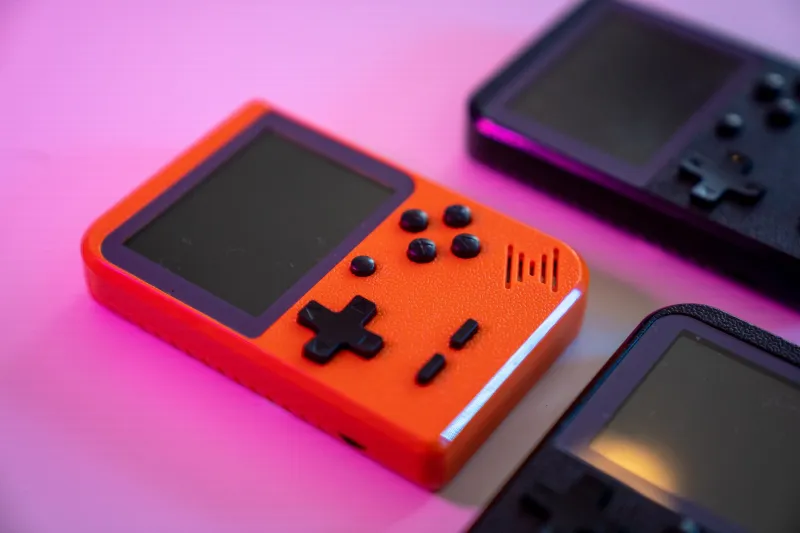
Let's define the category, because it's genuinely its own thing. Handheld robot battle devices sit somewhere between dedicated gaming handhelds, retro-style mini-consoles, and toys. The hardware is typically compact — most units are smaller than a deck of cards — with simple directional inputs, two to four action buttons, and a small screen. Some use cartridge-style game swaps. Others are single-game devices. A few newer entries have Bluetooth connectivity for head-to-head play.
The games themselves are stripped-down robot fighting experiences. No 30-minute story modes. No 200-page move lists. You pick a bot, you fight, you win or lose in under three minutes. The mechanical depth comes from the interplay of a small number of moves rather than the mastery of a huge system — closer in spirit to the original Game Boy era of fighting games than anything shipping on console today.
The breakout hardware unit in the US market has been the BattleCore Nano, a $34 device from a small California-based company called Ferric Play that launched with basically zero marketing budget and sold out its first production run of 8,000 units in 11 days through word of mouth alone. A second run of 25,000 units also sold out. Ferric Play has since announced a third production run with a new robot roster and wireless multiplayer support.
Why This Format? Why Now?
The timing question is worth sitting with, because the format itself isn't new. Dedicated handheld gaming devices with simple fighting games have existed since the 1990s. What changed?
A few things converged. The retro hardware aesthetic — chunky plastic, pixel art, tiny screens — has serious cultural currency with Gen Z in a way it didn't a decade ago. Wearing a BattleCore Nano on a lanyard at a convention is a style statement as much as a gaming choice. The device communicates something about the wearer's relationship to gaming history without requiring any explanation.
At the same time, the complexity ceiling on mainstream robot and mech games has kept rising. Titles like Daemon Steel Online and Fracture Wars are extraordinary pieces of software, but their learning curves are steep, their time commitments are enormous, and their communities can be hostile to newcomers. The BattleCore Nano asks nothing of you except five minutes and a willingness to get bodied by a 14-year-old.
Jordan "Pixelgate" Reyes, a content creator based in Phoenix who's built a following largely around handheld gaming content, put it plainly: "People are tired of games that are basically second jobs. The pocket robot thing is pick-up-and-play in a way that feels like gaming used to feel. There's no homework."
The Convention Scene Is Already Organized
What's remarkable about the handheld robot battle scene is how quickly it self-organized into competitive structures. Within eight months of the BattleCore Nano's launch, fan-run tournaments were appearing at conventions across the country — not just PAX and GDQ-adjacent events, but anime conventions, comic cons, and regional gaming meetups that had never hosted esports brackets before.
The format lends itself to live competition in a way that many modern games don't. Matches are fast. The hardware is visible and audible — the tiny speakers on these devices are surprisingly loud, and the crowd can follow the action on a shared display without needing a complex observer mode. Tournament brackets can run 64 players in an afternoon.
One of the most active tournament organizers in the space is a college senior named Destiny Chukwu who runs what she calls the "Iron Palm Circuit" out of Chicago. She's hosted eight events in 14 months, with the most recent drawing 140 entrants and a $1,200 prize pool funded entirely by entry fees and a local gaming shop sponsorship.
"The overhead is almost nothing," she said. "Thirty devices, some folding tables, a bracket on a whiteboard. You don't need a venue with a stage and a lighting rig. You can run this in a library meeting room."
Streaming Numbers That Should Embarrass AAA Studios
Here's the number that's making people in the industry do a double-take: BattleCore Nano tournament content on TikTok and YouTube has outperformed launch-week streams for two separate AAA robot-themed titles released in the past year. Not in total hours, but in engagement rate and share velocity — the metrics that actually drive discovery.
The reason isn't hard to understand once you watch the content. A three-minute handheld robot fight is perfectly sized for short-form video. The stakes are legible in seconds. The action is chaotic and fast. And the hardware itself is visually interesting — something about watching someone play on a tiny screen while a crowd gathers around them reads as inherently more exciting than a person sitting at a desk with a controller.
Streamer "Voltz" — 800,000 followers across platforms — dedicated two weeks of content to the Iron Palm Circuit last fall and called it the best-performing series he'd run in two years. "My audience didn't care that it was a $34 toy," he said. "They cared that the matches were insane and the community was clearly having the time of their lives."
What Comes Next
Ferric Play isn't the only company paying attention anymore. At least three other hardware manufacturers have announced handheld robot battle devices for 2025, including one with a $60 price point and a screen that's actually large enough to see without squinting. Mobile esports organizers are circling. One mid-sized tournament brand has already announced a national handheld robot battle bracket as part of a larger convention series.
Whether the scene can scale without losing the grassroots energy that made it special is the real question. Formalization has a way of ironing out the chaos that makes underground gaming scenes magnetic. The Iron Palm Circuit works because Destiny Chukwu cares about the community, not the optics. Whether that survives a corporate bracket structure is genuinely unknown.
For now, though, the line at the folding table is still the longest one in the hall. And that counts for a lot.