Running Scared: The Speedrunners Who Use Creepy-Realistic Robots as a Mental Gauntlet
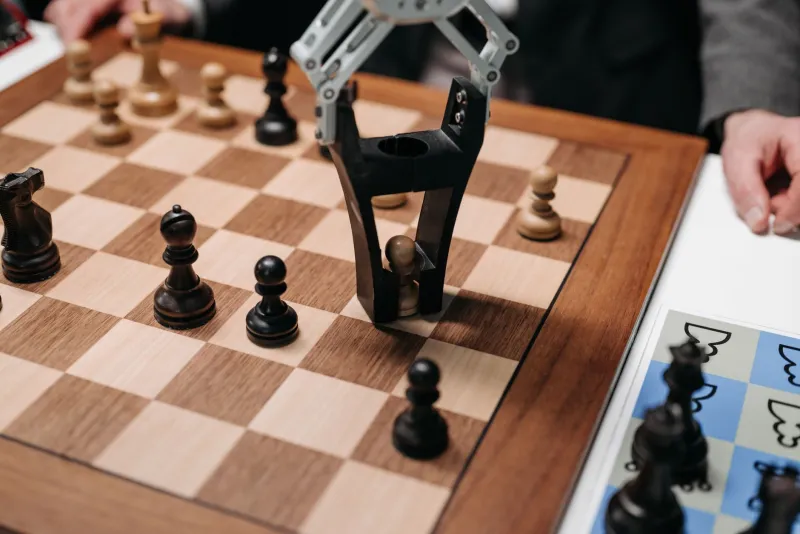
There's a specific kind of wrong that a robot can look. Not broken-wrong, not glitchy-wrong — but almost human wrong. The kind of wrong that makes your stomach do a quiet little flip before your brain even figures out why. Scientists call it the uncanny valley. Speedrunners in one very particular corner of the internet call it Tuesday.
A niche but fast-growing competitive scene has carved out its own lane inside the broader speedrunning world, and the entry requirement is weird: you have to be willing to stare down some of the most psychologically unsettling robot characters ever rendered on screen — and do it fast, repeatedly, under pressure, while a live chat full of people watches you squirm.
Welcome to what the community has started calling "valley running." It's part endurance sport, part psychological experiment, and honestly? It might be the most interesting thing happening in competitive gaming right now.
What Even Is Valley Running?
The premise sounds simple. Runners select games that feature hyper-realistic humanoid robots — think titles built on motion-capture animation systems, next-gen physics engines, or procedural movement that gets close enough to human locomotion to make your lizard brain panic a little. The goal is still standard speedrun fare: complete the game as fast as possible.
But the community layers an additional, unofficial scoring dimension on top. Players self-report what they call a "friction score" — a subjective rating of how much the game's robot characters disrupted their focus, forced hesitation, or caused what runners describe as "the flinch." The flinch is exactly what it sounds like: that involuntary half-second pause when a robot NPC turns its head just a hair too smoothly, or blinks on a delay that's maybe two frames off from natural.
Those two frames can cost you a run. That's the whole point.
"The flinch is free real estate for the clock," says Marcus T., a top-50 valley runner out of Austin, Texas, who goes by the handle Ferrousglitch online. "If a game can make me hesitate even once, that's a mental tax I'm paying the whole run. Learning to eat that tax without losing pace — that's the skill."
The Psychology Behind the Challenge
The uncanny valley as a concept has been kicking around since Japanese roboticist Masahiro Mori first described it in 1970. The basic idea: humans respond positively to robots that look somewhat human, but as the resemblance gets too close without being perfect, our comfort response inverts into unease. It's why certain CGI characters in early 2000s animated films felt off in ways that were hard to articulate.
Game developers have been accidentally and intentionally exploiting this phenomenon for years. But the valley running community is doing something different — they're treating the psychological response not as a bug to patch around, but as the core athletic variable.
Dr. Priya Nambiar, a cognitive psychologist who studies performance under emotional stress (and, full disclosure, a self-described "casual observer" of the speedrunning scene), explains it this way: "What these runners are doing is essentially desensitization training under competitive conditions. The uncanny valley triggers a mild threat response — your brain flags something as 'not quite right.' Managing that response in real time, without letting it spike your cortisol enough to break your concentration, is genuinely a trainable skill."
In other words, valley runners are building a very specific kind of mental callus.
The Games That Define the Scene
Not every game qualifies. The community maintains an informal tier list of "valley-certified" titles based on two criteria: animation fidelity and how frequently you're forced to interact with or observe robot characters up close.
Games with robotic enemies that stay at a distance don't cut it. The friction has to be personal. Titles where android characters walk beside you, make prolonged eye contact during cutscenes, or have facial animation systems sophisticated enough to almost — almost — convey genuine emotion tend to rank highest.
Some runners specifically seek out games with procedural animation systems, where robot movement is generated dynamically rather than hand-keyed. The unpredictability adds a layer of genuine surprise, meaning a runner might see a robot move in a way they've never encountered before mid-run, triggering a fresh flinch even on their fortieth attempt.
"Procedural stuff is the hardest," says Jenna K., known in the community as Voidframe, who holds several category records and streams out of Portland. "You can memorize a scripted animation. You cannot memorize infinite variation. That's where the real mental game lives."
Why the Community Says the Payoff Is Different
Here's the part that surprised me most when I started digging into this scene: valley runners consistently describe finishing a successful run as emotionally distinct from other speedrun victories. Not just satisfying — different in kind.
Martin C., who goes by Steelnerve and has been valley running for about two years out of Chicago, put it bluntly: "A normal PB [personal best] feels like you solved a puzzle. A valley run PB feels like you survived something. I don't know how else to describe it. Your heart rate is different. Your hands are shaking for a different reason."
There's something almost gladiatorial about that framing, which fits neatly into the broader culture of competitive gaming pushing into psychological territory. We've seen games weaponize fear, grief, even boredom as design tools. Valley running is the community reverse-engineering that approach — choosing the psychological obstacle deliberately and then building a sport around overcoming it.
The live stream culture around valley running leans into this hard. Chats fill up with "flinch detection" commentary, with viewers calling out the exact moment they see a runner's movement stutter. It's become its own form of spectator sport, with audiences hunting for the tells that reveal when the uncanny valley is winning.
The Bigger Picture
As robot animation in games keeps getting more sophisticated — and it will, relentlessly — the uncanny valley isn't going away. If anything, developers are going to keep pushing closer to the edge of that perceptual cliff, either to unsettle players intentionally or because photorealism is simply where the tech is headed.
Valley running feels like a community that got ahead of that curve. They found the friction point, decided it was interesting instead of annoying, and built something competitive out of it. That's a very Devil Robots kind of move, honestly — taking the thing that's supposed to mess with you and making it the arena.
The robots are getting more real. These runners are getting faster.
The clock doesn't care which one wins. But the flinch count does.